

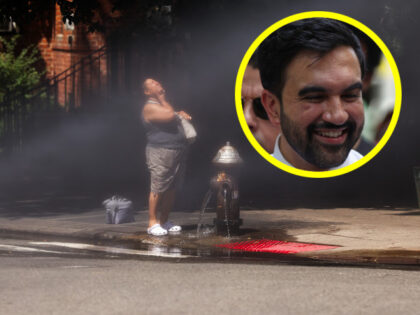
In the middle of a brutal summer heat wave, Con Edison pulled the plug on sections of Riverdale, a Bronx neighborhood with one of the city’s largest Orthodox Jewish communities, claiming the move was necessary to safeguard its aging grid. The timing is impossible to ignore: while residents sweltered without air conditioning or refrigeration, city officials offered little more than bureaucratic shrugs, and the selective nature of the outage—hitting a politically inconvenient demographic—has fueled accusations that progressive governance treats certain neighborhoods as expendable. For Second Amendment advocates, the episode is a textbook illustration of what happens when government monopolizes essential services and then rations them according to political calculus rather than public need.
The deeper lesson for the 2A community is that dependence on centralized infrastructure leaves citizens vulnerable not only to blackouts but to the whims of officials who already view armed self-reliance with suspicion. When the lights go out, the same politicians who champion “equity” and restrict lawful carry suddenly expect residents to trust the very system that failed them; history shows that crime spikes and response times lengthen during extended outages, turning law-abiding households into soft targets. Riverdale’s experience underscores why constitutional carry and robust home-defense rights matter: they shift the balance of power back to individuals precisely when government competence collapses.
Ultimately, the story is less about one utility decision and more about the broader pattern of urban governance that disarms citizens while simultaneously eroding the reliability of the services meant to replace personal responsibility. As heat waves intensify and grid strain grows, the 2A community should treat every selective blackout as a warning shot—evidence that the right to keep and bear arms is not an abstract principle but a practical necessity when the state’s promises of safety and order prove hollow.


