

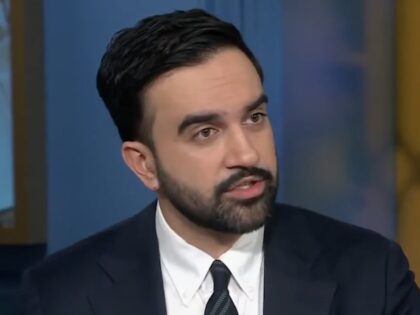
New York City Mayor Zohran Mamdani’s claim that the federal government has “exacerbated racism” through its political choices lands like another round in the long-running campaign to paint every American institution as irredeemably bigoted. The mayor’s rhetoric is not new, but it carries fresh weight when it comes from the nation’s largest city, where policy choices on crime, policing, and self-defense already shape daily life for millions. By framing government itself as the chief engine of racial harm, Mamdani sidesteps the uncomfortable data on urban violence, repeat offenders, and the communities most damaged when law-abiding citizens are stripped of effective means to protect themselves.
For the 2A community the implication is straightforward: if government action is recast as the root of racism, then every restriction on the right to keep and bear arms can be justified as corrective justice rather than public-safety policy. That framing has already produced “red flag” laws, magazine bans, and discretionary permitting schemes sold as equity measures, even as crime statistics show that lawful gun owners—disproportionately in minority neighborhoods—are the ones most often denied the tools that could deter predators. When political rhetoric elevates systemic blame over individual agency, the practical result is more barriers between citizens and the constitutional tools that have repeatedly proven color-blind in their defensive utility.
The deeper risk is that this narrative crowds out the empirical record: shall-issue carry, constitutional carry, and armed self-defense correlate with drops in violent crime across demographic lines, while cities that doubled down on gun control and “defund” experiments saw homicide spikes that hit the very populations the mayor claims to champion. If the response to every disparity is to further empower the same government that supposedly created the problem, the 2A community will face an endless series of “anti-racism” pretexts for disarming the law-abiding. The mayor’s weekend soundbite is therefore less a policy diagnosis than a permission slip for the next round of restrictions, and the firearms community would be wise to treat it as such.


