

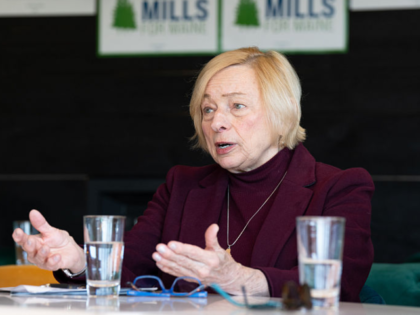
Maine’s senior Democrat governor is playing a familiar inside game by staying on the ballot even after she stepped back from active campaigning, giving voters a sanctioned way to reject the more radical Graham Platner without technically bolting the party. At 78, Mills is banking on name recognition and institutional loyalty to siphon enough votes from the progressive challenger to keep the seat from sliding further left, a calculation that matters because Platner’s record shows open hostility to the Second Amendment and a willingness to import California-style restrictions into a rural state that still values its hunting and self-defense traditions. By refusing to fully exit, Mills is essentially offering a safety valve for moderate Democrats who want to punish the party’s leftward lurch on guns without handing the seat to a Republican.
For the 2A community this episode is a reminder that primary challenges from the hard left are no longer fringe experiments; they are becoming the main vehicle for importing magazine bans, red-flag laws, and “assault weapon” prohibitions into states that once treated gun ownership as uncontroversial. Maine’s woods-and-water culture has long insulated it from coastal gun-control orthodoxy, yet a single well-funded progressive can force even an aging establishment Democrat to treat the gun issue as a live political liability. If Mills succeeds in bleeding off enough anti-Platner votes, the immediate danger of a new round of restrictions is postponed, but the underlying pressure remains: national Democratic donors and activist networks continue to view any deviation from the gun-control script as apostasy.
The larger takeaway is that 2A voters cannot treat ballot access or intra-party maneuvering as someone else’s problem. When an incumbent governor has to remind her own base that they can still choose her over a more extreme alternative, it signals how narrow the window has become for preserving shall-issue carry, constitutional carry, and traditional hunting access in states once considered safe. Maine’s November outcome will be watched closely by both sides as a test of whether institutional Democrats can still contain their own radicals or whether the party’s gun-control wing has finally captured the machinery of candidate selection.


