

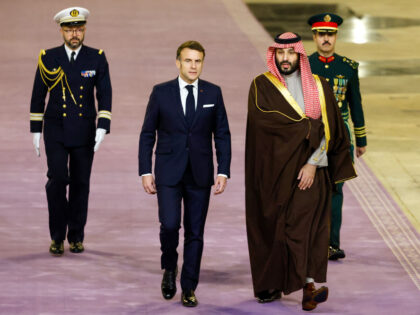
France’s decision to roll out the red carpet for Mohammed bin Salman arrives at a moment when the kingdom is quietly accelerating its own domestic firearms industry, a development that should interest every American gun owner who still believes the Second Amendment is more than a parchment promise. While Western media fixate on Jamal Khashoggi’s murder and the war in Yemen, Riyadh has been licensing local production of small arms, sniper rifles, and even precision-guided munitions under Vision 2030—an economic plan that treats a sovereign arms sector as a strategic hedge against U.S. export-license politics. The optics of a French state dinner may be clumsy, but the underlying transaction is brutally pragmatic: Paris gets petrodollars and a potential foothold in Gulf defense contracts; Riyadh gets technology it can eventually indigenize, reducing its reliance on Washington’s increasingly politicized arms-sales bureaucracy.
For the 2A community, the lesson is straightforward. When a hereditary monarchy can pivot from customer to competitor in less than a decade, it underscores how fragile any single nation’s production base can become once governments treat export licenses like foreign-policy weapons. American shooters who cheered the bump-stock ban or the pistol-brace rule may not connect those micro-restrictions to macro-strategy, yet the same impulse—centralized control over who may possess what—now animates European capitals debating “common-position” embargoes on Saudi Arabia. If France’s critics succeed in chilling the relationship, Riyadh will simply accelerate its own factories and court suppliers less squeamish about human-rights scorecards. The result is a more diffuse, multipolar small-arms market in which U.S. civilians could one day find domestically unobtainable components stamped “Made in KSA.”
The deeper implication is philosophical. A constitutional right exercised within a stable republic is still preferable to a royal decree that can be rescinded by the next crown prince, but rights are only as durable as the industrial ecosystem that manufactures the tools to exercise them. Watching France fête a man whose government is racing to build its own AR-15 equivalents should remind American gun owners that preserving domestic manufacturing capacity and resisting incremental controls are not hobbyist concerns—they are national-security imperatives hiding in plain sight behind every brace rule and “ghost-gun” bill.


