

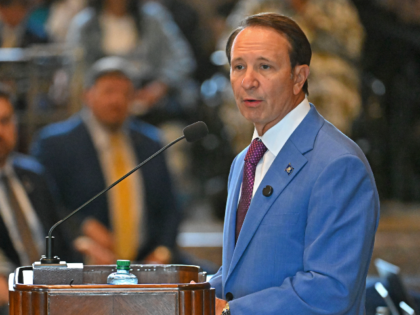
Louisiana Governor Jeff Landry just dropped a bombshell that’s got election-watchers and map-drawers scrambling: he’s suspending the May primaries to let lawmakers craft a fresh congressional district map, hot off the Supreme Court’s smackdown of the state’s race-based redistricting scheme. This isn’t some bureaucratic shuffle—it’s a direct response to the high court’s ruling that Louisiana’s previous map, engineered to guarantee a second majority-Black district under the Voting Rights Act, violated the Constitution’s ban on racial gerrymandering. Landry, a staunch conservative with a pro-2A backbone, sees this as a golden opportunity to redraw lines that better reflect voter priorities over demographic checkboxes, potentially flipping the state’s at-large seat (currently held by Democrat Troy Carter) into Republican hands and solidifying a 5-1 GOP edge in the delegation.
For the 2A community, this redistricting rodeo is a high-stakes chess match with real firepower implications. Louisiana’s congressional lineup has been a mixed bag—Carter, for instance, has been a reliable no on key pro-gun votes, while the Republican reps have championed permitless carry expansions and fought ATF overreach. A GOP-friendly redraw could lock in a near-unanimous pro-Second Amendment bloc, turbocharging efforts to shield the state’s robust gun rights (think constitutional carry for 18+, no red-flag laws, and strong preemption) from federal encroachments like Biden’s ghost gun regs or potential assault weapon bans. Critics will cry voter suppression, but this is democracy hitting the reset button: fairer maps mean districts driven by ideology, not identity, where 2A warriors can rally without racial quotas diluting their voice.
The ripple effects? Expect fireworks in Baton Rouge as Democrats howl and Republicans hustle to draw compact, community-focused lines that pass SCOTUS muster. For gun owners nationwide, it’s a blueprint—states like Louisiana are proving that post-2020 census redistricting, when done right, fortifies conservative strongholds against blue strongholds. Landry’s move isn’t just about seats; it’s a defiant stand for colorblind governance that amplifies the Second Amendment’s defenders. Keep your eyes peeled: by fall, Louisiana could be the poster child for how to wield the mapmaker’s pen in defense of our rights.


