

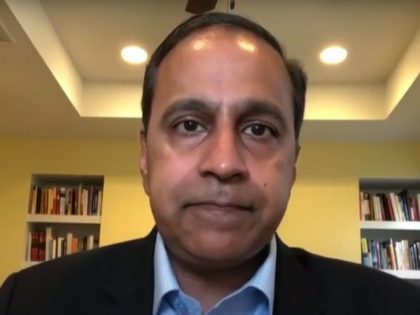
Rep. Raja Krishnamoorthi’s CNN appearance perfectly illustrates how the same political class that reflexively labels any immigration enforcement “racist” also treats the Second Amendment as a negotiable privilege rather than an enumerated right. By framing the Supreme Court’s TPS decision as an attack on Haitians rather than a straightforward application of statutory limits, Krishnamoorthi recycles the familiar tactic of substituting moral outrage for legal argument—an approach gun-control advocates have long used to portray shall-issue carry or the protection of semi-automatic rifles as somehow illegitimate. When the same voices insist that returning foreign nationals to their home countries is cruel while simultaneously pushing to disarm law-abiding Americans in high-crime cities, the selective compassion becomes impossible to ignore.
The deeper implication for the 2A community is that policy debates are increasingly framed not by constitutional text or empirical outcomes, but by which side can claim the moral high ground fastest. Just as sanctuary jurisdictions resist cooperation with ICE on the theory that federal immigration law is optional, some of those same jurisdictions have spent years carving out “sensitive places” and permit schemes that functionally nullify the right to bear arms. The TPS ruling simply reminds everyone that federal statutes still mean what they say; if that principle holds in immigration, it undercuts the creative reinterpretations gun-control litigators rely on when they argue that “the people” in the Second Amendment somehow excludes ordinary citizens.
For pro-2A advocates, the lesson is straightforward: every erosion of objective legal standards—whether in border policy or in the definition of “infringed”—eventually circles back to the right to keep and bear arms. When politicians treat enforcement of existing law as bigotry, they normalize the idea that constitutional protections are subject to the political mood of the moment rather than fixed constraints on government power. That mindset is the real long-term threat, and it explains why vigilance on immigration enforcement and vigilance on the right to arms are two sides of the same coin.


