

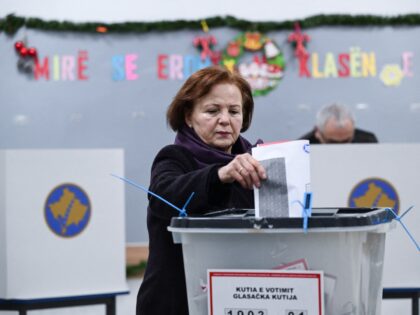
Kosovo’s latest snap election isn’t just another Balkan political merry-go-round; it’s a vivid reminder that sovereignty is never permanently secured without the means to defend it. While Pristina’s leaders trade accusations over stalled EU and NATO talks, ordinary Kosovars are left wondering whether their fragile independence can survive another round of coalition horse-trading. For Americans who value the Second Amendment, the lesson is blunt: when a nation cannot reliably arm and train its own citizens, it remains dependent on outside powers whose commitment can evaporate the moment political winds shift in Brussels or Washington.
The deeper story is how Kosovo’s stalled NATO path collides with the region’s gun-control realities. Serbia still refuses to recognize Kosovo’s statehood and maintains a conscript-ready force backed by Russian-supplied hardware; meanwhile, Kosovo’s own security forces operate under strict international oversight that limits both the size and the armament of its citizen-based reserves. That imbalance echoes the founding-era American insight that a free people must be able to field an armed citizenry capable of rapid mobilization—something the Framers codified precisely to avoid the fate of disarmed European micro-states forever courting larger protectors.
For the 2A community, Kosovo’s recurring elections underscore why domestic self-reliance matters more than foreign alliances. Every time Pristina’s politicians postpone hard decisions on defense procurement or civilian marksmanship programs, they hand leverage to neighbors who view gun ownership as a state monopoly rather than an individual right. The takeaway is straightforward: paper guarantees from distant capitals are no substitute for an armed, trained populace that can deter aggression long before NATO convoys ever roll in.


