

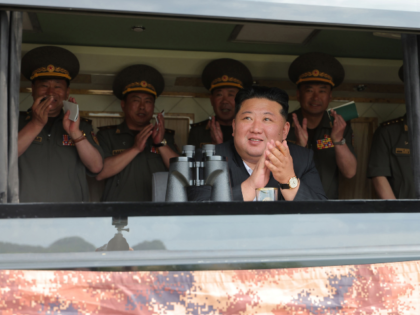
North Korea’s latest push to bulk up its nuclear stockpile isn’t just another headline from Pyongyang—it’s a stark reminder that authoritarian regimes treat weapons as the ultimate guarantor of power. Kim Jong-un’s meeting to boost both the “quality and quantity” of his arsenal shows a dictator who understands that deterrence comes from credible capability, not empty promises or international treaties. For Americans who value the Second Amendment, the lesson is clear: when a government monopolizes force at this scale, individual liberty becomes a bargaining chip rather than a birthright.
The contrast with our own constitutional framework couldn’t be sharper. While Kim consolidates nukes to keep his people in line, the Founders designed the right to keep and bear arms precisely to prevent that kind of centralized tyranny. Every new North Korean warhead underscores why an armed citizenry remains the ultimate check against would-be strongmen—history shows that disarmed populations rarely fare well when rulers decide “quality and quantity” of force should rest solely with the state. The Kim regime’s obsession with bigger bombs is therefore less a foreign-policy curiosity than a living argument for why the 2A community must stay vigilant against any incremental erosion of that right here at home.
Beyond the obvious geopolitical tension, this development ripples into domestic debates over gun control and national security. Lawmakers who claim that only the government can be trusted with advanced weaponry ignore the fact that the same governments often turn those weapons inward; North Korea simply makes that danger explicit. Supporters of the Second Amendment see in Kim’s meeting a cautionary tale: the moment a society accepts that certain arms are “too powerful” for private citizens is the moment it begins down the same path Pyongyang has already traveled. Keeping the right to effective self-defense intact isn’t paranoia—it’s the practical recognition that freedom’s price is measured in the people’s ability to resist, not merely to petition.


