

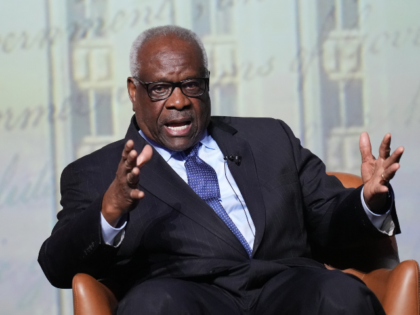
Justice Clarence Thomas’s dissent cuts straight to the heart of what citizenship actually means in a republic founded on consent rather than blood-and-soil inheritance. By tracing birthright citizenship back to the feudal notion that a person’s legal status is fixed by the soil on which they happen to be born, Thomas reminds us that the 14th Amendment was never intended to turn the United States into a global maternity ward. The majority’s reading, he argues, converts a post-Civil War guarantee meant to secure freed slaves into an open-ended invitation that dilutes the value of the very citizenship millions of Americans have fought and died to preserve. For the 2A community this matters because every expansion of the franchise without corresponding assimilation erodes the cultural consensus that has historically protected the right to keep and bear arms; when citizenship becomes a geographic accident rather than a deliberate affirmation of American principles, the political coalition willing to defend the Second Amendment shrinks.
The practical stakes are immediate. States and localities already struggling with sanctuary policies and non-citizen voting initiatives now face the prospect that children born to illegal entrants will automatically inherit full constitutional rights—including the ability, upon reaching adulthood, to purchase firearms without the same vetting or cultural attachment that native-born citizens receive through upbringing. Thomas’s opinion underscores that the Court’s earlier jurisprudence on the 14th Amendment was never meant to constitutionalize a policy that effectively exports American citizenship to every corner of the world. If birthright citizenship is treated as an untouchable rule rather than a debatable interpretation, future courts could likewise discover new “rights” that further constrain the people’s ability to regulate who may possess arms inside the United States.
The deeper implication is philosophical: a nation that no longer believes it has the sovereign authority to decide who becomes a member also loses the moral authority to decide who may be armed. Thomas’s dissent is therefore not merely an immigration case; it is a quiet warning that the same interpretive methods used to stretch the 14th Amendment can be repurposed to shrink the 2nd. Citizens who value an armed republic should pay close attention when one of the Court’s originalists reminds us that citizenship, like the right to bear arms, was meant to be a hard-won privilege of membership, not an accidental byproduct of geography.


