

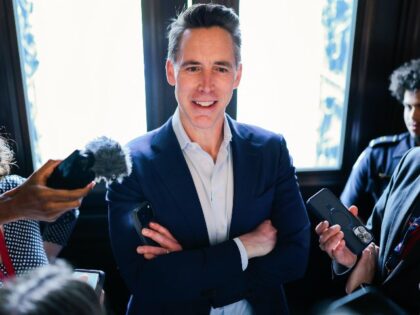
Sen. Josh Hawley’s warning that artificial intelligence could reduce people to “raw material” lands with particular force for anyone who still believes rights are inherent rather than granted by code. When the same handful of coastal firms that already shape speech, finance, and now lethal targeting algorithms also control the data that will train tomorrow’s autonomous systems, the distance between a citizen and a data point shrinks fast. Hawley’s “winner-take-all” diagnosis is not abstract theory; it describes the same market concentration that has already funneled defense contracts, cloud storage, and social-media moderation into a narrow set of gatekeepers—precisely the entities most eager to define who may own, train with, or even access firearms once “risk scores” replace background checks.
For the 2A community the stakes are immediate and practical. An AI trained on biased datasets could flag lawful purchases, social-media posts, or even range visits as indicators of “extremism,” feeding those flags into red-flag algorithms that bypass due process. Worse, the same models are already being pitched to law-enforcement agencies as tools to predict “gun violence,” a phrase that conveniently blurs defensive carry with criminal acts. If the moral covenant Hawley invokes is reduced to whatever maximizes engagement or minimizes liability for the companies running the models, the Second Amendment’s individual-right foundation becomes just another variable to be optimized away.
The practical takeaway is that technological literacy is now a core Second Amendment skill. Understanding how training data is sourced, how model outputs are audited, and who ultimately signs off on lethal-force recommendations matters as much as knowing how to clear a malfunction. Hawley’s alarm is less about killer robots than about a quiet transfer of authority—from citizen and Constitution to whoever writes the next line of code.


