

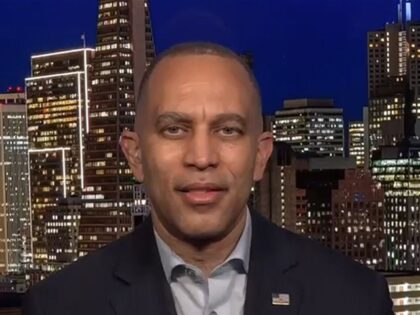
Hakeem Jeffries’ call for Democrats to treat Donald Trump as the singular “enemy” is less a policy critique than a declaration that the 2024 contest will be fought on raw political power rather than legislative substance. By framing the former president—not inflation, border security, or crime—as the existential threat, Jeffries is signaling that every committee hearing, every floor vote, and every regulatory proposal will be subordinated to the overriding goal of removing Trump from contention. For the firearms community that already endured the Biden-Harris ATF’s pistol-brace rule, expanded “engaged in the business” definitions, and quiet attempts to choke off credit-card processing for gun purchases, this rhetoric confirms that any future Democratic majority will view gun owners not as constituents but as obstacles to be neutralized in service of the larger anti-Trump campaign.
The practical effect is already visible in the legislative calendar. Rather than risk primary challenges from the left by negotiating background-check reforms or red-flag statutes that might peel off moderate Republicans, House Democrats are more likely to pursue sweeping executive or regulatory actions that can be executed without GOP votes—actions a second Trump administration would then have to unwind through new appointments at ATF and DOJ. That dynamic raises the stakes for every pro-2A voter in 2024: midterm complacency or third-party experimentation could hand Jeffries the gavel and turn the next two years into a regulatory blitz whose rules would survive long after any single election.
Jeffries’ language also telegraphs how the culture war over guns will be waged. By casting supporters of the Second Amendment as accessories to the “enemy,” Democrats are incentivized to portray common firearms, standard magazines, and even private transfers as uniquely Trumpian dangers rather than longstanding constitutional protections. The result is a feedback loop in which each new restriction is justified not by data on crime or accidents but by its utility in damaging Trump—an approach that historically produces poorly drafted rules, aggressive enforcement, and inevitable court challenges that keep the issue boiling through multiple election cycles. For gun owners, the takeaway is straightforward: the contest is no longer about marginal improvements in shall-issue permitting or suppressor reform; it is about whether the institutional machinery of the federal government will be captured by a party that has explicitly named its political opponents as the enemy and the right to keep and bear arms as one of the battlefields.


