

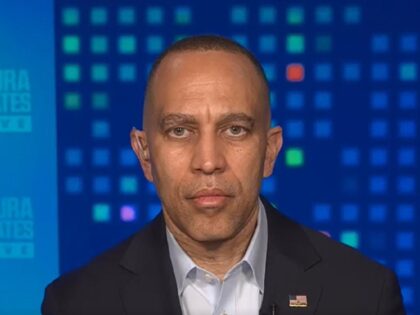
Rep. Hakeem Jeffries’ admission that simply extending the enhanced Affordable Care Act subsidies won’t deliver affordable care for every American is a telling moment of candor from the House Minority Leader. The subsidies, which have ballooned federal spending by tens of billions each year, were sold as a temporary pandemic-era bridge; now Democrats are treating them as permanent fixtures. Jeffries’ call for “several steps” beyond the subsidies signals that the party’s next move will likely involve deeper price controls, expanded Medicaid, or even a public option—each of which historically crowds out private markets and drives up costs for everyone else. For the firearms community, this matters because the same logic of “government knows best” that fuels these healthcare schemes is routinely aimed at the right to keep and bear arms. When Washington decides it can centrally plan an entire sector of the economy, the precedent is set for similar interventions in the firearms industry, from ammunition taxes disguised as “public-health measures” to licensing schemes that function as back-door registration.
The deeper implication is that the ACA’s cost spiral has already squeezed middle-class households, leaving less disposable income for training, range fees, or the next generation of lawfully owned firearms. Every additional tax dollar funneled into subsidies is a dollar that could have stayed in the private economy—where gun owners, small manufacturers, and FFLs operate. Jeffries’ pivot also foreshadows renewed pressure on employer-sponsored insurance, the very plans that currently cover millions of workers in America’s robust domestic firearms and defense sectors. If those plans are destabilized, both employers and employees will face higher premiums or reduced benefits, tightening budgets at precisely the moment the industry is adapting to new state-level restrictions and federal regulatory creep.
Ultimately, Jeffries’ comments reveal a political class unwilling to confront the root drivers of healthcare inflation—over-regulation, mandated benefits, and third-party payer distortions—yet eager to expand the same flawed model. The 2A community should recognize the pattern: once government assumes responsibility for life-and-death decisions in medicine, it rarely stops at the doctor’s office. The same impulse that seeks to nationalize health insurance can, and often does, migrate to the regulation of arms and ammunition under the banner of “public safety.” Staying alert to these policy cross-overs is no longer optional; it is essential to preserving both individual health-care choice and the individual right to self-defense.


