

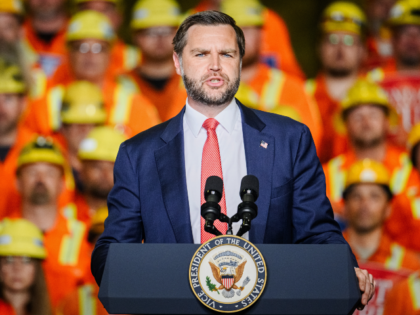
Vice President JD Vance’s rebuke of the Wall Street Journal and congressional Democrats lands like a warning shot across the bow of the open-border consensus. By spotlighting how lax enforcement has funneled millions of unvetted migrants into the interior, Vance is drawing a direct line between porous sovereignty and the erosion of the rule of law—something Second Amendment advocates have long argued is the first domino to fall before the right to keep and bear arms is curtailed. When federal agencies admit they’ve lost track of hundreds of thousands of “got-aways,” the practical effect is a nationwide surge in untraceable firearms, cartel-driven gun trafficking corridors, and overwhelmed local sheriffs who can no longer guarantee the timely enforcement of existing gun laws, let alone new ones.
The deeper implication for the 2A community is that border security is no longer a peripheral immigration issue; it is now a de-facto gun-control battlefield. Cartels flush with fentanyl profits are swapping high-powered weaponry for smuggling corridors, while progressive municipalities quietly adopt “sanctuary” edicts that shield illegal aliens from federal background checks. The result is a two-tier enforcement regime: law-abiding citizens face red-flag laws and pistol-brace rules, yet the same officials refuse to prosecute prohibited persons caught with firearms after illegal entry. Vance’s critique therefore reframes the Wall Street Journal’s editorial stance not as mere policy disagreement, but as an unwitting assist to policies that disarm the lawful while arming the lawless.
For grassroots gun owners, the takeaway is strategic as well as philosophical. Every rifle purchased at a border-state gun show, every training dollar spent on vehicle-based defense, and every vote cast for sheriffs who honor ICE detainers now doubles as border-security activism. If the administrative state cannot—or will not—secure the frontier, the individual right to effective self-defense becomes the last line of constitutional order. Vance’s broadside is therefore less about scoring political points and more about reminding Americans that the Second Amendment was designed for exactly this moment: when the government’s first duty, to protect the citizenry from foreign predation, is treated as optional.


