

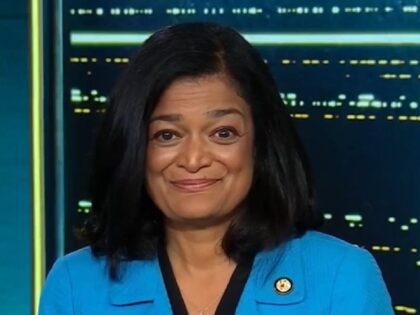
In a move that perfectly illustrates the modern Democratic Party’s willingness to stretch its “big tent” until the flaps touch the ground, Rep. Pramila Jayapal shrugged off Democratic House nominee Darializa Avila Chevalier’s glowing praise for Marxism and Communism as mere “labels.” Jayapal’s breezy dismissal—“Whatever labels you want to attach to it”—signals that ideological flirtation with systems that historically disarmed citizens before they disarmed their rights is now just another quirky viewpoint to be welcomed rather than a disqualifier. For the firearms community, the message is unmistakable: if praising the political philosophy most responsible for 20th-century gun confiscations isn’t disqualifying, then neither will be the next “common-sense” restriction that flows from the same worldview.
The episode is less about one candidate’s college-era nostalgia and more about a party comfortable mainstreaming rhetoric once confined to campus coffee-house debates. When politicians treat the intellectual architecture of regimes that turned private firearms into state property as an intramural disagreement, they reveal how far the Overton window has slid on issues that directly touch the Second Amendment. Gun owners who remember that every Marxist experiment began with registration lists and ended with prohibition notices should treat Jayapal’s nonchalance as an early-warning flare, not background noise.
For 2A advocates, the takeaway is strategic as much as philosophical. Races featuring candidates who view the right to keep and bear arms as an inconvenient bourgeois relic will test whether voters still draw a hard line between “big tent” tolerance and outright embrace of confiscatory ideology. The 2024 cycle is shaping up to be a live-fire referendum on whether the Democratic coalition’s expanding definition of acceptable opinion will finally meet resistance at the ballot box—or whether the party’s center of gravity continues its steady migration away from individual liberty and toward collective control.


