

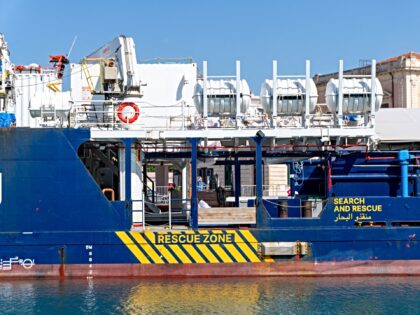
Italy’s decision to detain and fine the Sea-Watch vessel is the latest chapter in a long-running Mediterranean standoff between sovereign states and the self-appointed “rescue” flotilla that has turned the central sea route into a de-facto ferry service for economic migrants. Interior Minister Piantedosi’s move signals that Rome is no longer content to let NGOs operate as parallel coast guards; by impounding the ship and levying penalties, Italy is reasserting that maritime borders are not suggestions—they are lines that carry consequences when crossed without permission. For observers on this side of the Atlantic, the episode is a textbook demonstration of what happens when a nation finally treats its sovereignty as non-negotiable rather than a talking point for international NGOs.
The parallel to the American gun-control debate is direct and instructive. Just as European governments once insisted that “reasonable” restrictions on firearms would never lead to confiscation, they now claim that “humanitarian corridors” would never become open-ended population transfers. Both promises have aged poorly. When Italian authorities finally acted, they did so with the same tools available to any coastal state—port state control, administrative fines, and the simple refusal to allow a foreign-flagged vessel to keep cycling through its waters. The lesson for Second Amendment advocates is that legal mechanisms already on the books can be used either to protect or to erode foundational rights; the difference lies in whether elected officials possess the political will to employ them. Italy’s move shows that will can be summoned when the costs of inaction become impossible to ignore.
For the U.S. pro-2A community, the takeaway is strategic rather than tactical. The same NGOs and legal networks pushing Mediterranean ferry services are ideologically aligned with domestic gun-control organizations that frame private firearm ownership as a public-health crisis requiring ever-tighter “rescue” measures. Both efforts rely on the narrative that individual or national self-help is illegitimate and that only supra-national or administrative bodies may decide who may move, who may trade, and who may defend themselves. Italy’s detention of the Sea-Watch vessel is therefore more than a shipping story; it is a reminder that sovereignty—whether of a nation’s coastline or of an individual’s right to keep and bear arms—survives only when it is exercised, not merely declared.


