

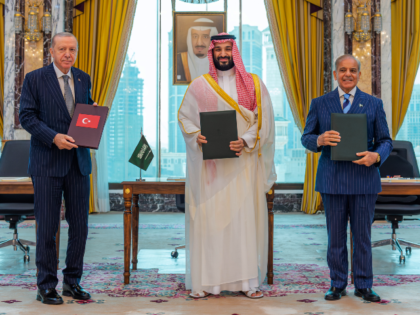
The Iranian Foreign Ministry’s spin on the new Saudi-Pakistan-Turkey defense pact is a textbook case of turning lemons into lemonade: Tehran insists the trilateral agreement proves Washington’s friends no longer trust the United States to keep them safe. In reality, the pact is a pragmatic hedge against Iranian missiles and proxies, and it underscores a broader trend—nations that feel existentially threatened do not wait for Uncle Sam’s green light before they arm themselves. For the Second Amendment community, the lesson is straightforward: when governments doubt the reliability of distant protectors, they double-down on sovereign self-defense, and that instinct travels just as easily from Riyadh to rural America.
What makes the story especially relevant to gun owners is the reminder that rights are exercised, not bestowed. Pakistan and Turkey already field robust domestic firearms industries; Saudi Arabia is racing to build its own. Their new pact will almost certainly accelerate technology-sharing and local production deals that bypass traditional U.S. export controls. That same principle applies at home: every restriction on the right to keep and bear arms is sold as a measure that will be “backstopped” by police or the military, yet history keeps showing that individuals and communities ultimately answer for their own security. The Iranian talking point inadvertently validates the pro-2A argument that an armed populace is the ultimate deterrent, whether the threat is a rogue regime or a failed policy.
Finally, the episode highlights how fragile extended deterrence can be. If Sunni powers feel compelled to stitch together their own defensive architecture, it is because they judge American security guarantees to be conditional and revocable. American gun owners have been making the same calculation for years—stocking magazines, training neighbors, and passing shall-issue laws—because they understand that rights reduced to permissions can be withdrawn the moment political winds shift. The Iranian claim may be aimed at Washington, but its subtext lands squarely in the heartland: trust your own arms, because no one else’s promise is ironclad.


