

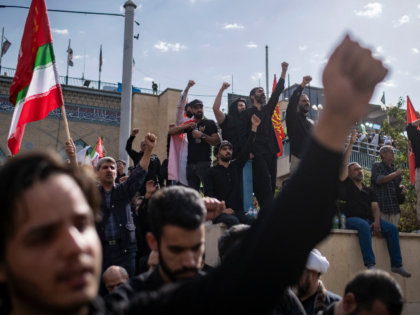
Iran’s latest propaganda salvo—claiming to have “liberated” Jordan by killing U.S. troops and downing three fighter jets—collapsed within hours under the weight of Jordanian denials and the absence of any wreckage or casualties. The Islamic Revolutionary Guard Corps (IRGC) broadcast the fiction to stoke regional panic and to portray itself as the vanguard of a new caliphate, yet the only verifiable fact is that Jordanian air defenses intercepted a handful of inbound projectiles that caused no damage. The episode is a textbook case of information warfare: a regime that cannot project conventional power resorts to manufactured victories to keep its domestic audience distracted from economic collapse and its own internal dissent.
For the Second Amendment community, the takeaway is straightforward: when a state actor like Iran can conjure battlefield successes out of thin air, the only reliable deterrent is an armed, informed citizenry that refuses to outsource its security to governments that may be slow, captured, or simply wrong. The same regime that fabricates missile strikes is the one that funnels weapons to cartels and proxies across our southern border; waiting for Washington to “do something” after the next incident is a recipe for vulnerability. An individual right to keep and bear arms is not an abstract principle—it is the practical backstop that keeps foreign disinformation from becoming domestic disarmament.
Jordan’s quiet dismissal of Tehran’s boasts also underscores a broader strategic reality: credibility is a finite resource. Regimes that traffic in grotesque exaggerations eventually lose the ability to shape narratives when real crises erupt. That erosion of trust is why millions of Americans have concluded that the safest hedge against both foreign adventurism and domestic overreach is a well-armed populace that can verify facts for itself and, if necessary, act on them. In an age of weaponized fiction, the right to bear arms remains the most tangible form of truth insurance we possess.


