

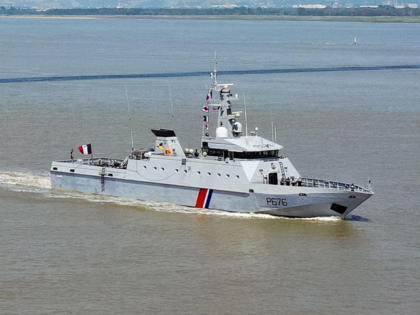
A French warship’s decision to conduct live-fire drills within sight of a British MP’s vessel monitoring migrant crossings in the Channel is more than a diplomatic spat—it’s a textbook demonstration of how governments weaponize “training exercises” to send political messages. When the senior Conservative lawmaker accused Paris of intimidation, he wasn’t merely complaining about noise; he was highlighting the oldest tactic in the book: using the visible presence of state firepower to discourage scrutiny. For Second Amendment advocates, the episode is a reminder that the right to keep and bear arms exists precisely because citizens must sometimes stand their ground against official intimidation, whether that pressure comes from a foreign navy or a domestic agency.
The optics are unmistakable. A warship doesn’t need to target a civilian boat to make its point; the thunder of its guns and the spray of spent casings across the water are message enough. In the UK, where civilian firearms ownership is already heavily restricted, such displays reinforce the cultural message that only the state may project force. Contrast that with the American tradition, where an armed citizenry is viewed as the ultimate check against both foreign coercion and domestic overreach. The French action, intentional or not, underscores why the Founders insisted that the security of a free state rests with the people, not solely with uniformed professionals who can be ordered to “train” wherever political expediency demands.
For the 2A community, the takeaway is straightforward: vigilance isn’t paranoia when governments treat the open sea—or an open range—as their private stage. Every time a lawmaker or journalist is stared down by state hardware, it validates the principle that rights reduced to permissions can be withdrawn at the sound of the first cannon. The Channel incident may fade from headlines, but the lesson remains: an unarmed populace watches; an armed one observes, records, and, when necessary, pushes back.


