

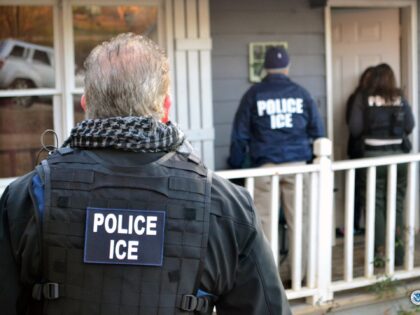
In a move that underscores the current administration’s renewed focus on interior enforcement, federal agents from Markwayne Mullin’s Department of Homeland Security swept through a South Carolina manufacturing plant and walked out with two managers and nearly fifty illegal migrants in custody. The raid wasn’t just another headline about border numbers; it exposed how illegal labor quietly props up certain sectors of the economy while undercutting American workers who expect legal workplaces and fair wages. For the firearms community, the story carries an extra layer of relevance: every illegal worker removed is one less person who could have been exploited by traffickers, cartels, or sanctuary jurisdictions that turn a blind eye to both immigration violations and the straw purchases or straw-carry schemes that sometimes follow.
The managers’ arrests are especially telling. When employers knowingly hire an illegal workforce, they create an underground economy that doesn’t just depress wages; it also sidesteps the very background-check systems that responsible gun owners rely on to keep firearms out of prohibited hands. A plant running on fake documents is a plant where payroll records are already falsified—exactly the kind of environment where untraceable cash and off-the-books transactions flourish, conditions that historically bleed into illegal firearms trafficking. By contrast, the enforcement action signals that the rule of law is returning to the workplace, a development that aligns with the broader principle that legal, documented citizens are the only reliable stewards of both jobs and the constitutional right to keep and bear arms.
Looking ahead, this raid is a reminder that immigration enforcement and Second Amendment security are not separate lanes; they intersect wherever illegal networks operate. As more employers face real consequences for skirting the law, the labor market tightens in favor of American citizens who can pass NICS checks and participate openly in the firearms community. That tightening also starves the black-market ecosystems that thrive on undocumented populations, reducing the pool of potential straw purchasers, gang members, and prohibited persons who might otherwise obtain firearms through the same shadow channels that move illegal labor. In short, when DHS cleans up a worksite in South Carolina, it isn’t only protecting American paychecks—it’s quietly reinforcing the cultural and legal firewall that keeps guns in the hands of law-abiding citizens rather than the underground economy.


