

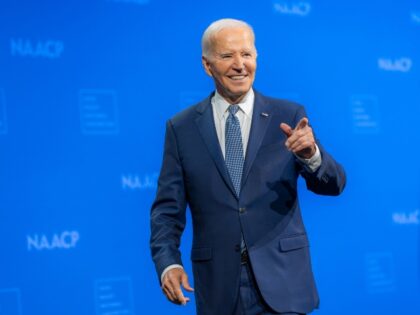
In a clip making the rounds online, Joe Biden sits down with Jay Leno and openly boasts about the regulatory chokehold his administration placed on domestic drilling, pipelines, and leasing—actions that sent gasoline prices spiking and forced greater reliance on foreign energy. The former president frames these moves as environmental victories, yet the footage lands like a tone-deaf victory lap to anyone who watched fuel costs climb past five dollars a gallon while inflation hammered working families. What’s striking is how casually he treats the destruction of an industry that still powers the vast majority of American transportation, manufacturing, and agriculture, revealing a worldview that sees energy abundance as a problem rather than a foundation of national strength.
For the firearms community the connection is direct and practical: when domestic oil production is deliberately throttled, the ripple effects hit every corner of the supply chain that keeps ranges open, factories running, and law-abiding citizens able to train and compete. Higher energy prices raise the cost of polymer feedstock, steel, brass, and the diesel that moves components across state lines, ultimately pushing the price of ammunition and firearms upward while squeezing small businesses that already operate on thin margins. At the same time, an administration willing to celebrate the shuttering of an entire domestic sector signals the same regulatory philosophy that has targeted braces, pistol grips, and standard-capacity magazines—energy policy and gun policy spring from the same impulse to limit individual capability in the name of centralized control.
The larger implication is that voters who value both cheap fuel and the right to keep and bear arms are watching the same pattern play out across unrelated industries: government first creates scarcity, then uses that scarcity to justify further restrictions. Whether the target is a drilling rig in North Dakota or a competition shooter in Texas, the message is consistent—dependence is easier to manage than independence.


