

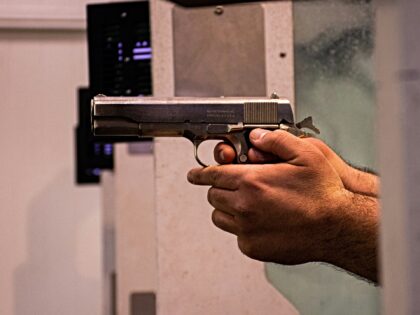
A Rochester homeowner’s decision to meet an intruder with decisive force at 4:15 a.m. is a textbook reminder that the Second Amendment is not an abstract debating point—it is the last line of defense when seconds count and squad cars are still miles away. The fact that the encounter unfolded inside the kitchen, the literal heart of the home, underscores how close the threat came to the family’s most private spaces; had the homeowner hesitated or relied solely on 911, the outcome could have been tragically reversed. For the 2A community, this incident is more than local news—it’s fresh evidence that law-abiding citizens who keep firearms accessible and train for low-light, high-stress scenarios are exercising a right that routinely saves lives when police response times stretch into the critical minutes after an alarm is tripped.
Beyond the immediate drama, the story spotlights the quiet statistical reality that defensive gun uses dwarf criminal gun uses by multiples every year, yet receive a fraction of the coverage. Rochester’s police chief will likely cite “ongoing investigation,” but the homeowner’s survival already validates the core pro-2A argument: the right to keep and bear arms is exercised most often not at the range or in the woods, but in the dark hallway between a child’s bedroom and an unknown set of footsteps. Lawmakers pushing “safe storage” mandates or “red flag” expansions should be forced to answer how those policies would have played out in this kitchen at 4:15 a.m.—and whether they are willing to trade a homeowner’s life for theoretical future risks that never materialized.
Finally, the incident should prompt every gun-owning household to run an unsparing after-action review: Is the home-defense firearm staged where an adult can reach it without crossing the threat’s path? Is everyone in the house drilled on a simple, verbal challenge-and-cover plan? Rochester’s kitchen proves once more that the Second Amendment is not about hunting or sport; it is about preserving the irreducible human right to stop an attack the moment it becomes unambiguous—and to do so with the tool the Founders enshrined precisely because governments cannot post an officer in every home.


