

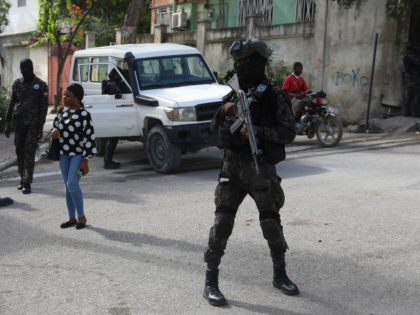
Haiti’s decision to push ahead with presidential elections in December, despite the country being held hostage by heavily armed gangs, is a textbook case of how quickly a society can descend into chaos when the rule of law collapses. The gangs that now control roughly 80 percent of the capital are not merely street criminals; they are well-armed, well-organized, and increasingly political. Their arsenals—built from smuggled military-grade weapons, diverted police stockpiles, and black-market flows from neighboring states—have turned Port-au-Prince into a live-fire zone where even basic movement is negotiated at gunpoint. For the 2A community, the lesson is blunt: when a government cannot or will not protect its citizens, the people left behind are forced into a brutal calculus of self-reliance or submission.
What makes the Haitian situation especially instructive is how the absence of functioning institutions has created a power vacuum that armed groups have filled with ruthless efficiency. The gangs did not appear overnight; they grew in the space left by years of political paralysis, corruption, and the steady erosion of state authority. In that environment, firearms are not abstract policy questions—they are the difference between being able to feed your family or watching your neighborhood become someone else’s territory. The upcoming elections, if they happen at all, will be conducted under the shadow of these armed factions, a reminder that ballots without the credible threat of force to back them are little more than theater.
For American gun owners watching this unfold, the implications are closer to home than the distance suggests. Haiti’s collapse did not begin with guns; it began with the systematic dismantling of the structures that make self-defense meaningful—effective policing, impartial courts, and a culture that treats the individual right to security as non-negotiable. When those pillars fall, the Second Amendment’s promise becomes either a lifeline or a memory depending on whether citizens still possess the means and the legal space to exercise it. The gangs of Port-au-Prince are not an anomaly; they are what happens when a population is first disarmed by neglect and then re-armed by desperation.


