

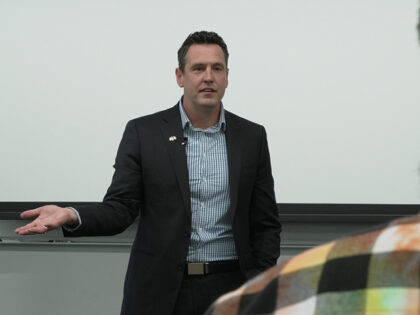
In a political upset that caught national attention, Iowa’s Republican primary delivered a clear message when an outsider candidate toppled the establishment favorite by pledging to halt the state’s universities from importing foreign H-1B contract labor. The win wasn’t just about immigration numbers; it was a referendum on whether American institutions should prioritize citizens for high-skill roles or continue outsourcing them under the banner of “global talent.” For the firearms community, the parallel is obvious: the same elite consensus that treats skilled American workers as interchangeable has long dismissed domestic manufacturing capacity, repeatedly claiming we “can’t find” U.S. workers to build everything from precision rifle components to optics. When universities and corporations default to foreign contract labor, they shrink the pipeline of American engineers, machinists, and technicians who might otherwise enter domestic defense and firearms production—exactly the skilled base the 2A community relies on to keep innovation and manufacturing onshore.
The deeper implication is that H-1B expansion has functioned as a quiet subsidy for offshoring institutional knowledge while suppressing wages that would otherwise attract and retain American talent. Iowa’s result signals that voters are beginning to connect those dots, recognizing that a nation unwilling to train and hire its own people will eventually discover it has fewer citizens capable of designing, building, or even competently regulating the tools of liberty. For Second Amendment advocates, this isn’t an abstract labor issue; it’s about preserving the industrial ecosystem that produces everything from match-grade barrels to serialized frames. A political class that treats American workers as optional is the same class that later wonders why domestic production is fragile and why dependence on foreign supply chains feels increasingly risky.
If this primary result travels beyond Iowa, expect renewed pressure on universities and state contractors to justify every H-1B hire against a documented search for qualified Americans—an accountability standard that could gradually widen the bench of home-grown engineers and machinists. That shift would strengthen, rather than dilute, the technical workforce that keeps American gunmaking innovative and independent. In short, the same voters who just rejected outsourced university staffing may soon ask why the same logic shouldn’t apply to the factories and labs that ultimately determine whether the right to keep and bear arms remains practically exercisable.


