

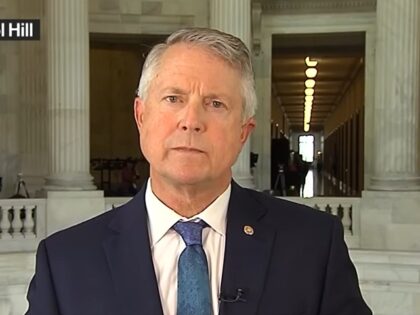
Sen. Roger Marshall’s offhand remark that he “hopes” Iran will spend its newly unfrozen billions on Kansas wheat instead of centrifuges is the kind of Washington naïveté that should chill every gun owner who still remembers the Obama-era pallets of cash. The senator’s sunny assumption—that dollars handed to a theocratic regime will magically stay earmarked for “humanitarian” wheat—ignores the fungible nature of money and the IRGC’s long record of diverting every revenue stream into missiles, proxies, and, yes, nuclear infrastructure. When the same Beltway crowd once assured us that lifting sanctions would moderate Tehran, the result was more cash for Hamas rockets and Hezbollah tunnels; there is zero reason to believe the sequel will be any different.
For the 2A community the lesson is straightforward: every dollar that props up an avowed enemy of the United States is a dollar that can eventually be aimed back at American interests, whether through emboldened terror groups or through the steady erosion of our own energy leverage. An Iran flush with hard currency can purchase not only grain but also the dual-use components, machine tools, and even small-arms manufacturing know-how that authoritarian states have historically funneled to their proxies. The same politicians quick to dismiss those downstream risks are often the first to propose new domestic gun controls whenever a foreign-funded terror incident occurs on U.S. soil. In short, foreign-policy weakness abroad quickly becomes an excuse for rights-restrictions at home; the cycle is as predictable as it is dangerous.
The deeper implication is that energy and financial sanctions are themselves a form of national self-defense—one that keeps both dollars and weapons out of the hands of regimes that chant “Death to America.” When those tools are casually waived in pursuit of a signature on paper, the 2A community loses another layer of strategic insulation. Law-abiding Americans who stockpile ammunition and train with their rifles are not paranoid; they are responding to a world in which policymakers repeatedly choose to re-arm our adversaries and then act surprised when the bill comes due.


