

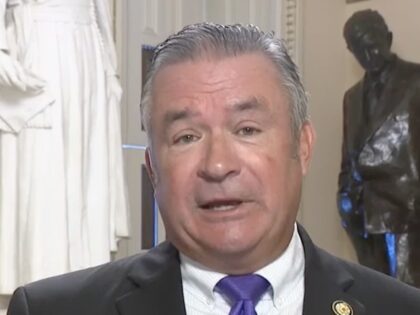
If Congress had pushed back against President Trump’s tariff policies instead of acting like rubber stamps, their approval ratings would be significantly higher, according to Rep. Don Bacon (R-NE). Speaking Monday on CNN’s “The Situation Room,” the Nebraska Republican suggested that blindly following the White House on trade has hurt lawmakers’ standing with voters who clearly want representatives willing to exercise independent judgment. Bacon’s blunt assessment cuts to the heart of a recurring problem in Washington: when one branch of government treats another as a subordinate rather than a co-equal, public trust erodes. For Second Amendment supporters, this dynamic should ring familiar and urgent. Just as trade policy has been largely dictated by executive action and emergency powers in recent years, gun rights have repeatedly been targeted through the same unilateral regulatory creep, whether it’s ATF rule changes on braces, frames, or ammunition, or attempts to stretch existing statutes far beyond their original intent.
The lesson here is bigger than tariffs. When Congress abdicates its constitutional role, the executive branch fills the vacuum, often with policies that bypass the deliberate, messy process the Founders designed to protect liberty. Second Amendment advocates have watched this movie before: an administration that dislikes lawful firearm ownership simply rewrites definitions, imposes new taxes through regulation, or pressures banks and tech companies to de-bank gun owners and manufacturers. Representative Bacon’s observation should serve as a warning shot for gun owners. If Republicans in Congress continue playing “yes men” on every priority instead of asserting their Article I powers, they risk not only their own political futures but the long-term security of constitutional rights. A legislature that refuses to check executive overreach on trade today will likely lack the spine to push back against executive overreach on the Second Amendment tomorrow.
The pro-2A community understands that real legislative oversight is not disloyalty; it is the very mechanism that prevents any single administration from treating the Bill of Rights as optional. Whether the issue is reciprocal carry legislation, national reciprocity for concealed carry, curbing the administrative state’s abuse of the Gun Control Act, or defending domestic firearm manufacturing from punitive regulation disguised as trade policy, Congress must reclaim its authority. Bacon’s comments offer a rare moment of candor from inside the Beltway. If lawmakers want higher favorables and stronger public support, they should start by remembering they work for their constituents and the Constitution, not any one president. The defense of the right to keep and bear arms depends on a Congress willing to say “no” when executive ambition exceeds constitutional bounds.


