

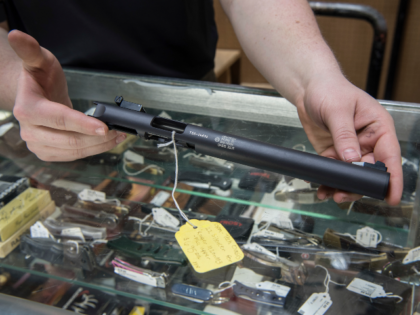
The Jensen v. ATF decision was never meant to be a one-off victory for a single plaintiff; it was a judicial rebuke of the ATF’s habit of rewriting statutes by administrative fiat. By urging the DOJ to codify that holding through rulemaking, Rep. Clyde and his coalition are essentially telling the agency: “If you insist on governing by guidance letters, at least make the guidance match the law.” That move flips the usual script—normally the administrative state expands its reach through regulation; here, the regulated are demanding the regulators lock in a court-imposed limit so it can’t be clawed back the next time the political winds shift.
For the broader Second-Amendment community the stakes are practical as well as philosophical. A nationwide rule would give every FFL, every gun-owning traveler, and every hobby gunsmith the same certainty that Jensen’s plaintiffs now enjoy, eliminating the patchwork of regional U.S. Attorney interpretations that currently forces law-abiding citizens to guess whether a particular configuration is “legal this month.” More importantly, it would set precedent that courts—not career bureaucrats—have the final word on what constitutes a “firearm” under federal law, a precedent that could blunt future attempts to redefine braces, triggers, or even magazines through the Federal Register.
Critics will claim the coalition is trying to “deregulate” via regulation, but that misses the point: the ask is not for new liberties, merely for the executive branch to stop inventing restrictions Congress never passed. If the DOJ accepts the invitation, it will have converted a single district-court win into a durable safe harbor; if it refuses, the refusal itself becomes Exhibit A in the next lawsuit testing whether agencies can nullify judicial decisions by the simple expedient of ignoring them. Either outcome sharpens the larger debate over who actually writes gun policy in the United States—and whether that authority still resides with the people’s elected representatives.


