

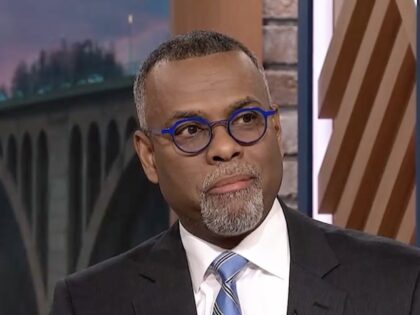
Eddie Glaude Jr.’s claim on MSNBC that the Trump administration and the white-supremacist group Patriot Front are essentially interchangeable is the kind of rhetorical escalation that has become routine on cable news, yet it lands with particular force on the Second Amendment community. By equating an elected administration with a fringe outfit whose members have been arrested for planning violence, Glaude collapses any distinction between policy disagreement and actual extremism—an approach that has historically been used to justify sweeping restrictions on the very tools law-abiding citizens rely on for self-defense. When the line between mainstream conservatism and “white supremacy” is drawn this loosely, every gun owner who supports border security or questions certain red-flag proposals suddenly risks being painted with the same brush.
That framing matters because the 2A community has spent years documenting how similar language has preceded legislative pushes—from magazine bans to “assault weapon” prohibitions—sold to the public as necessary responses to “rising extremism.” If the administrative state is already being told it faces no substantive difference from groups it is legally empowered to investigate and prosecute, the temptation to treat ordinary gun owners as presumptive threats grows stronger. The practical result is not heightened public safety but the steady transfer of presumptive rights from individuals to bureaucrats who decide, on ever-shifting political grounds, who is safe enough to keep a firearm.
For those who value the right to keep and bear arms as a check on government excess rather than a privilege doled out by it, Glaude’s rhetoric is a reminder that cultural arguments precede legal ones. When influential voices normalize the idea that half the country’s elected leadership is indistinguishable from a designated extremist cell, the policy menu that follows rarely includes expanded constitutional carry or national reciprocity; it tilts instead toward registration schemes, insurance mandates, and “extreme risk” orders that can be triggered by social-media posts or even lawful protest attendance. The 2A community’s task is therefore not merely to rebut the factual inaccuracy but to recognize the strategic pattern: redefine your opponents as beyond the pale, then regulate the rights they exercise.


