

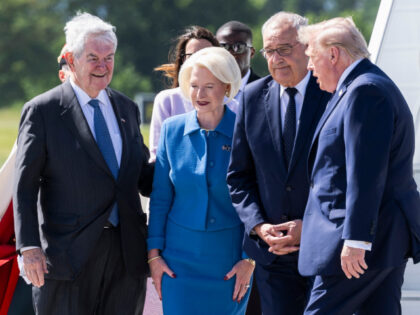
Newt Gingrich’s endorsement of President Trump’s Iran deal lands like a strategic reset button for American foreign policy, one that quietly reshapes the threat matrix facing the United States and its allies. By rejecting both the Obama-era appeasement model and the costly prospect of another boots-on-the-ground war, the agreement forces Tehran to confront verifiable limits on its nuclear ambitions while preserving U.S. leverage through sanctions relief tied to compliance. For the firearms community, this matters because a contained Iran reduces the likelihood of a wider regional conflagration that historically drives up demand for defensive firearms, ammunition, and training—yet it also underscores why millions of Americans continue to stockpile magazines and optics: government-to-government deals can shift overnight, and the Second Amendment remains the ultimate hedge against uncertainty.
The deeper implication is that realistic diplomacy paired with credible deterrence mirrors the same logic that underpins responsible gun ownership. Just as the deal keeps conventional military options on the table without rushing into them, law-abiding citizens maintain the right to keep and bear arms not because conflict is inevitable, but because preparedness deters aggression at every level—from street crime to foreign adventurism. Gingrich’s point that no one has articulated a superior alternative highlights a broader truth: when elites dismiss practical, strength-through-preparedness solutions, the results are usually more expensive and less secure. The 2A community has watched this pattern play out in domestic policy for decades; seeing it validated on the world stage only reinforces why constitutional carry and shall-issue permitting remain essential safeguards in an unpredictable world.


