

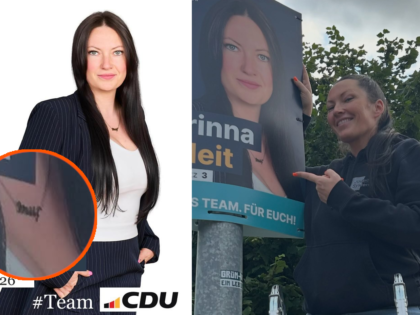
A German Christian Democrat candidate’s decision to wear a necklace spelling “MILF” in her official election portrait has set off a predictable media frenzy, but the real story isn’t the necklace—it’s the cultural double-standard it exposes. In a country where the state still treats private gun ownership as a privilege rather than a right, the same political class that clutches its pearls over three letters on a chain also insists that only the government can be trusted with firearms. The candidate’s unapologetic personal branding is a small act of cultural rebellion against that mindset: she is signaling that adult citizens, not bureaucrats, decide what is appropriate for their own image and, by extension, for their own self-defense.
For American Second Amendment advocates, the episode is a useful reminder that incremental cultural normalization matters as much as legislation. Europe’s heavily restrictive gun laws did not spring fully formed from parliament; they grew out of decades of elite-driven social pressure that equated private firearms with deviance. When a mainstream candidate can wear a cheeky necklace without being drummed out of respectable politics, it loosens the grip of that pressure. Conversely, every time gun owners are portrayed as inherently suspect, the Overton window narrows. The German story shows how seemingly unrelated cultural skirmishes—over speech, symbols, and personal presentation—ultimately feed the same narrative that justifies disarming the law-abiding.
The takeaway for pro-2A readers is straightforward: victories in the culture war are not distractions from legislative fights; they are the terrain on which those fights are won or lost. If a necklace can rattle Germany’s political establishment, imagine what consistent, confident public carry and open advocacy can do in the United States. The same forces that police language and symbols are the forces that would like to police the gun safe. Keeping both battlefronts active is how rights endure.


