

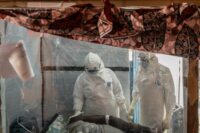
The confirmation that a French doctor has tested positive for Ebola after treating patients in Congo is a stark reminder that deadly pathogens don’t respect borders or bureaucratic timelines. While the immediate focus is on contact tracing and containment, the episode underscores how fragile centralized medical systems can be when an outbreak slips past initial screening. For those who value self-reliance, the story quietly reinforces why the ability to protect one’s own household—whether through legal firearms ownership or stockpiled medical supplies—remains a prudent hedge against slow-moving government responses.
History shows that once a high-consequence pathogen reaches a major European city, panic buying and travel restrictions follow within days. The 2A community has long argued that personal preparedness isn’t paranoia; it’s the logical extension of recognizing that state resources are finite and sometimes misallocated. In this case, the infected physician’s return to France before symptoms fully manifested highlights how quickly an individual can become a vector, and why waiting for official guidance can leave families exposed. Firearm owners who also maintain robust first-aid and quarantine plans aren’t preparing for “the end of the world,” they’re simply refusing to outsource their survival to agencies that have repeatedly proven reactive rather than proactive.
Ultimately, the incident is less about one doctor and more about the recurring gap between global mobility and institutional readiness. When the next pathogen emerges—whether from Central Africa or a lab halfway around the world—the same pattern will repeat: delayed recognition, strained hospitals, and sudden policy shifts that can limit movement or access to resources. Citizens who already exercise their Second Amendment rights understand that rights are exercised, not granted on demand; the same mindset applies to medical autonomy and emergency planning. In short, vigilance isn’t optional—it’s the baseline for anyone who refuses to be a statistic in the next official press release.


