

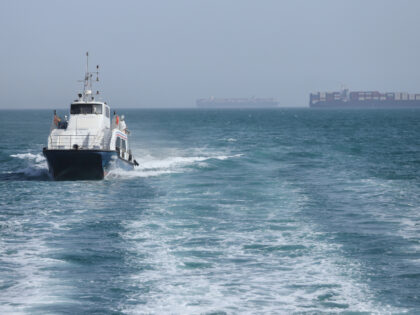
The former Coordinator for Counterterrorism in the first Trump administration, Amb. Nathan Sales, delivered a blunt assessment on NewsNation this week: the United States must ratchet up pressure on Iran, and if Tehran continues threatening commercial shipping, Washington retains the capability to reopen the Strait of Hormuz by force. Coming at a moment when Iranian proxies have already disrupted global energy flows and Houthi rebels continue harassing Red Sea traffic, Sales’ comments underscore a growing consensus that passive deterrence has failed. For years the regime in Tehran has exploited Western restraint, using its network of militias and its own naval forces to incrementally test the limits of American resolve without triggering full-scale retaliation. Reopening the strait isn’t simply a naval operation; it would represent a decisive reassertion of freedom of navigation, a principle that has protected American commercial interests for generations.
This matters to the Second Amendment community because the right to keep and bear arms exists within a broader philosophy of self-reliance and strategic realism. Just as law-abiding citizens refuse to outsource their personal defense to unreliable institutions, the nation cannot indefinitely outsource its maritime security to half-measures and diplomatic theater. An Iran emboldened by nuclear ambiguity and Chinese-Russian patronage directly threatens the global energy markets that keep prices stable at home. Higher fuel costs ripple into every sector of American life, including the firearms industry, where ammunition components, polymer production, and transportation expenses all feel the squeeze. When adversaries sense weakness in Washington, they accelerate hybrid warfare tactics that ultimately endanger the very stability that allows civilians to train, compete, and defend their rights without constant government overreach.
Sales’ willingness to speak plainly about military options serves as a reminder that credible deterrence, whether on the international stage or at the individual level, requires both capability and the political will to use it. The 2A community understands this instinctively: rights that are not defended atrophy. If policymakers allow the Strait of Hormuz to become a Iranian choke point, the resulting economic pressure will inevitably fuel renewed assaults on domestic gun ownership under the guise of “crisis response.” A strong, unapologetic posture abroad reinforces the cultural confidence necessary to protect constitutional liberties at home. The lesson is clear: whether facing a regime in the Persian Gulf or authoritarians in our own bureaucracy, peace through strength remains the surest guardian of freedom.


