

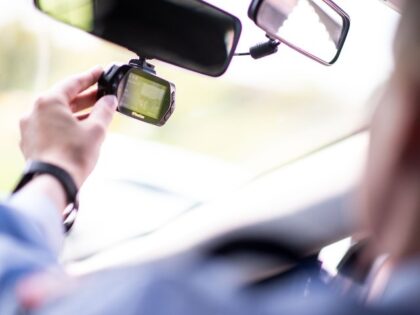
Flock Safety’s quiet pitch to turn hundreds of thousands of Uber, Lyft, and delivery drivers into rolling license-plate cameras is the latest reminder that the surveillance state no longer needs a badge or a budget line—it just needs an app and a willing partner. The company’s internal slide deck, pried loose by a public-records request, shows plans to harvest plate data from dash cams already sitting on windshields nationwide, feeding it straight into Flock’s real-time network without drivers ever hitting “record.” For Second Amendment advocates who have spent years warning that every database ends up in the same set of hands, the scheme is less innovation than confirmation: once the infrastructure exists to track cars, the same dragnet can—and will—be pointed at gun owners, ranges, and gun shows under the ever-expanding banner of “public safety.”
The deeper problem isn’t just the technology; it’s the laundering of government surveillance through private platforms that answer to venture capitalists, not voters. Uber and Lyft already know where you are to the square foot; adding plate readers turns every fare into a rolling checkpoint. When that data pool merges with Flock’s existing 40,000 fixed cameras and untold number of police partnerships, the result is a de-facto national gun-registry-by-another-name: who attended the last gun show, who stopped at a rural range, who bought primers in bulk. The 2A community has seen this movie before—background-check databases quietly repurposed, “temporary” emergency orders becoming permanent—so the prudent response is to treat every new sensor as hostile until proven otherwise.
Legislatures are starting to notice. Several states have already banned Flock’s fixed cameras or required warrants for plate data; the ride-share angle simply raises the stakes. Law-abiding gun owners should push for hard limits: opt-in only, strict retention caps, audit trails, and, above all, recognition that driving a car or hailing a ride does not constitute consent to mass surveillance. If the infrastructure is allowed to metastasize, the next “public-private partnership” will not be asking permission at all—it will simply arrive pre-installed.


