

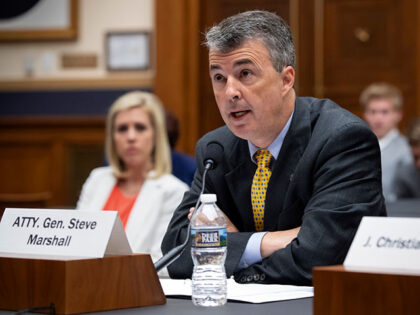
A federal court just threw a wrench into Alabama Republicans’ redistricting ambitions, halting a map that would have locked in a 6-1 GOP advantage in the state’s congressional delegation. The ruling, issued ahead of the 2026 midterms, underscores how aggressively courts are now policing racial gerrymandering claims under the Voting Rights Act, even when the proposed lines appear to reflect the state’s actual voting patterns. For Second Amendment supporters, the decision is a reminder that the same institutional forces reshaping electoral maps are also the ones increasingly hostile to gun rights—activist judges, DOJ pressure, and a media narrative that treats any pro-Republican map as inherently suspect.
The deeper implication is structural. Alabama’s electorate has shifted rightward on both cultural and constitutional issues, including strong support for constitutional carry and resistance to federal gun-control mandates. When courts override state legislatures on district lines, they effectively dilute the voting power of those pro-2A majorities, making it harder to elect lawmakers who will defend the right to keep and bear arms at the federal level. This isn’t abstract theory; every seat that flips or stays artificially competitive becomes another vector for future assault-weapons bans, magazine restrictions, or ATF rulemaking that bypasses Congress entirely.
Looking ahead to 2026, the blocked map forces Alabama Republicans to redraw under tighter constraints, potentially creating more Democratic-leaning districts in a state where gun ownership is both widespread and culturally entrenched. That outcome hands anti-2A groups a tactical win without winning at the ballot box, illustrating why map fights matter as much as legislation itself. For the firearms community, the lesson is clear: electoral integrity and Second Amendment defense are now inseparable battlegrounds.


