

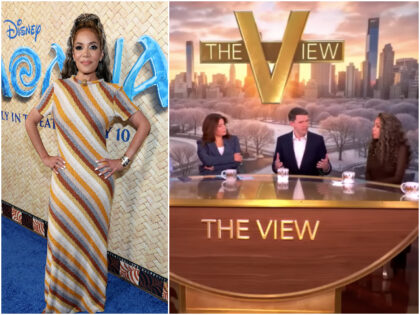
Federal Communications Commissioner Brendan Carr’s public rebuke of Sunny Hostin lands like a warning shot across the bow of legacy media’s claim to neutrality. While ABC insists “The View” qualifies as a “bona fide news program” deserving regulatory protections, Carr highlighted Hostin’s on-air call to “flip the Senate” as textbook partisan electioneering. The contradiction is glaring: a network that enjoys First Amendment latitude as a journalistic enterprise is simultaneously deploying its platform to mobilize voters for one party, all while the same corporate parent lobbies Washington for favorable spectrum and merger treatment. For Second Amendment supporters who have watched decades of selective outrage over “assault weapons” and “gun violence” on daytime talk shows, the episode confirms what many already suspected—corporate media’s news label is often just cover for coordinated political messaging.
The deeper implication for the pro-2A community is structural. When a single conglomerate can brand its opinion programming as journalism, it gains both the prestige of objectivity and the legal insulation that comes with it, allowing narratives about “commonsense gun safety” to travel from studio to statute with minimal pushback. Carr’s intervention signals that regulators are finally willing to examine whether that insulation still serves the public interest, especially when the same voices pushing magazine bans and red-flag laws are also shaping electoral outcomes. If the FCC follows through, the result could be narrower safe-harbor protections for overtly partisan content, forcing networks either to segregate activism from reporting or to operate under the same disclosure rules that apply to political action committees.
For gun owners, the stakes are straightforward: every election cycle that media outlets help tilt toward anti-2A majorities brings new restrictions on carry, ownership, and manufacturing. Exposing the partisan machinery behind the “news” label is therefore not merely a media-criticism exercise; it is preemptive defense of the right to keep and bear arms. Carr’s tweet may be just one commissioner’s observation, but it reframes the debate from “what the hosts said” to “why a broadcast licensee is allowed to say it while claiming journalistic immunity,” a distinction that could matter long after the next Senate majority is seated.


