

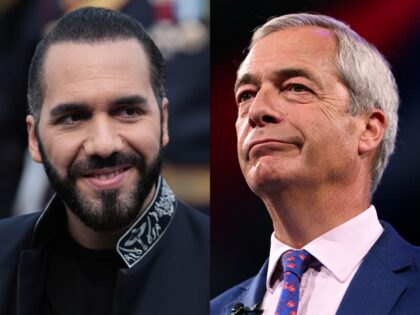
Nigel Farage’s Reform UK has quietly opened a back-channel with Nayib Bukele’s El Salvador, exploring whether Britain’s most violent foreign-national offenders could be shipped to Bukele’s mega-prisons instead of clogging British cells. The idea is simple: if a migrant commits a serious crime, the UK pays El Salvador a per-head fee to warehouse the offender for the duration of the sentence, freeing up space at home and removing the political headache of deportation fights with activist courts. Bukele’s model—mass arrests, zero-tolerance policing, and purpose-built containment—has already slashed El Salvador’s homicide rate from Latin America’s highest to among its lowest, proving that swift, certain incarceration works when political will exists.
For American Second Amendment advocates, the story is less about British jails and more about the principle that sovereignty still matters. When a nation loses control of its borders and its criminal-justice system, the predictable result is pressure to disarm the law-abiding population that remains. The UK’s post-Dunblane handgun ban and ever-tightening shotgun rules were sold as responses to “gun crime,” yet the data show that the fastest-growing category of weapons offenses now involves knives and acid wielded by the very cohort Reform wants to export. By contrast, Bukele’s approach pairs strict enforcement with an explicit recognition that citizens retain the natural right of self-defense; El Salvador’s homicide drop has occurred without new gun bans aimed at lawful owners. The lesson travels: effective border and prison policy reduces the perceived need for ever-stricter gun control, while feckless enforcement invites it.
If Reform’s experiment succeeds, it will hand the global gun-control lobby a data point they cannot easily dismiss—namely, that removing career-criminal non-citizens correlates with safer streets without touching the rights of the native population. Conversely, if the talks collapse under legal or diplomatic pressure, expect renewed calls in Britain and Europe to further restrict legal firearms ownership as a substitute for actual enforcement. Either way, the episode underscores a core 2A truth: the right to keep and bear arms is downstream of a government’s willingness to secure its territory and punish violent offenders; lose the latter and the former becomes an easy political target.


