

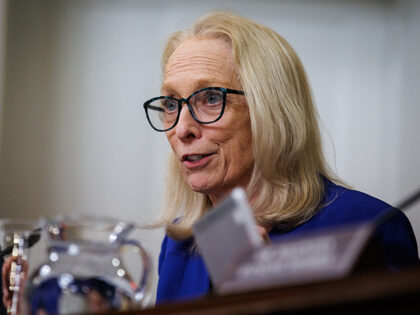
Rep. Mary Gay Scanlon’s claim that the SAVE Act would strip voting rights from half of Pennsylvania is the kind of statistical sleight-of-hand that collapses the moment you look at actual turnout data and state ID laws already on the books. Pennsylvania already requires some form of identification for first-time voters and mail ballots; expanding that standard to every election simply aligns the commonwealth with the 36 other states that treat voter ID as routine rather than racist relic. The half-figure appears to rest on the dubious assumption that tens of thousands of otherwise eligible adults possess zero government-issued photo ID—an assertion repeatedly contradicted by academic studies and DMV issuance records that show photo-ID possession rates above 90 percent across every demographic slice.
For the 2A community the episode is a reminder that the same political class eager to brand basic election security as “suppression” is equally eager to brand basic self-defense as “extremism.” Both arguments rely on portraying ordinary citizens—rural gun owners, working-class commuters, elderly veterans—as too inept or too dangerous to handle fundamental constitutional tools without extra bureaucratic hurdles. When Democrats float the notion that millions of Pennsylvanians cannot navigate a driver’s license or passport application, they inadvertently validate the pro-2A argument that shall-issue carry permitting regimes are less about public safety and more about selective disarmament of law-abiding adults.
The deeper implication is that institutional distrust cuts both ways: if one side insists voter ID is an intolerable burden, it becomes harder to argue that magazine bans, red-flag laws, or pistol-roster schemes are light-touch regulations rather than de-facto prohibitions. The SAVE Act fight is therefore not an isolated franchise spat; it is another front in the larger contest over whether constitutional rights are treated as presumptive liberties or contingent privileges doled out by credentialed gatekeepers.


