

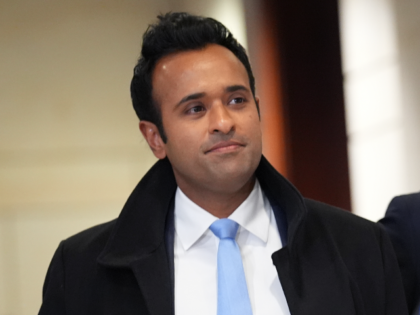
Vivek Ramaswamy’s declaration that America is already inside a second industrial revolution isn’t just campaign rhetoric—it’s a direct signal to the firearms community that the next wave of American manufacturing will be built on the same principles that have kept the Second Amendment alive: innovation, decentralization, and unapologetic self-reliance. When he talks about bringing advanced production to Ohio, he’s describing an ecosystem where precision machining, additive manufacturing, and domestic supply chains can flourish without the regulatory choke points that have historically funneled gun-making capacity into a handful of coastal or foreign entities. For 2A advocates, that means more American-made barrels, optics, and serialized frames rolling off lines that aren’t hostage to foreign policy shocks or ESG scorekeepers.
The deeper implication is that this industrial resurgence could finally break the long-standing asymmetry between legacy defense contractors and the cottage-industry innovators who have driven recent leaps in suppressors, modular chassis, and smart optics. Ramaswamy’s emphasis on deregulation and energy abundance translates into lower barriers for small and mid-sized manufacturers—the very shops that have kept the AR-15 platform evolving despite decades of attempted bans. If Ohio becomes a magnet for these firms, the state’s existing network of skilled tradespeople and pro-2A lawmakers could create a virtuous cycle: more jobs, more political support for shall-issue carry and constitutional carry, and a tangible rebuttal to the narrative that gun manufacturing is somehow incompatible with modern economic growth.
Ultimately, Ramaswamy’s framing forces the 2A community to think beyond litigation and legislation and start treating industrial policy as a core civil-rights issue. A nation that can’t make its own rifles, ammunition, and optics at scale is one Supreme Court vacancy away from effective disarmament; conversely, a decentralized manufacturing base anchored in heartland states makes future gun-control schemes logistically and politically far more expensive to enforce. The second industrial revolution he describes isn’t just about semiconductors and EVs—it’s about whether the tools of liberty remain American-made and American-owned for the next generation.


