

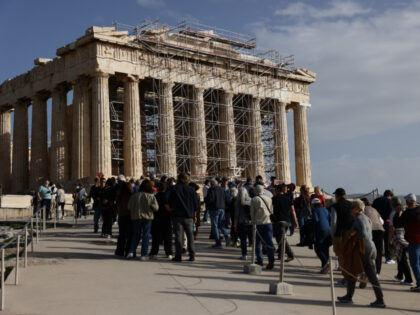
When President Trump wades into the Parthenon marbles dispute, he isn’t just playing diplomat—he’s reminding the world that the West’s greatest treasures belong to the people who built them, not to the museums that claim them by conquest. The Greek official’s appeal is blunt: return the “stolen” friezes and metopes that Lord Elgin pried from the Acropolis two centuries ago, and Trump’s name will echo alongside Pericles. For Second Amendment advocates, the parallel is obvious. Just as the marbles were taken under the shadow of empire and later defended by the same empire’s legal fictions, our firearms are today targeted by officials who insist that rights exercised for generations are suddenly illegitimate because a new regime dislikes them. Both fights are about sovereignty—cultural in Athens, individual in America—and both hinge on whether governments can rewrite history to justify confiscation.
The timing is no accident. As European courts weigh repatriation claims and American cities weigh “equity-based” gun surrender programs, the principle at stake is identical: property and rights secured under earlier, lawful conditions cannot be retroactively nullified by political fashion. Trump’s willingness to insert himself into the marbles saga signals that he grasps this continuity. If he can stare down the British Museum’s curatorial class on behalf of Greek patrimony, he can just as credibly stare down domestic bureaucracies that treat the Second Amendment as an embarrassing relic rather than a living guarantee. The marbles teach a simple lesson: once a treasure is surrendered to centralized custody, getting it back is an uphill political fight measured in generations. The same is true of the right to keep and bear arms; lose it in one election cycle, and the legal climb to restoration can last centuries.
For the 2A community, the Greek overture is therefore more than foreign-policy theater. It is a reminder that cultural artifacts and constitutional rights share the same vulnerability: both can be alienated by paperwork, both can be held hostage by institutions that claim superior stewardship, and both are ultimately reclaimed only when leaders treat them as non-negotiable inheritances rather than negotiable privileges. Trump’s potential role in Athens is a dry run for the larger argument at home—that the American founding’s armory of liberty is no less deserving of repatriation than the sculpted horses of the Parthenon pediment.


