

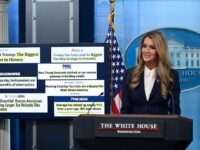
SBA Administrator Kelly Loeffler’s blunt assessment of the so-called experts and legacy media isn’t just another Beltway spat—it’s a direct rebuke of the same institutional voices that have long weaponized economic forecasts to justify gun-control measures. When those voices predict catastrophe over tariffs or claim the sky is falling on small businesses, they’re often laying groundwork for the next round of regulatory “solutions” that disproportionately hit the very manufacturers, distributors, and retailers who keep the firearms ecosystem alive. Loeffler’s refusal to play along signals that the current administration intends to treat economic resilience as a national-security asset rather than a bargaining chip for globalist trade deals that have historically funneled capital away from domestic defense industries.
For the 2A community, the stakes are concrete. Tariffs on Chinese components have already nudged several optics, ammunition, and accessory makers to accelerate stateside production or near-shoring strategies—moves that reduce reliance on adversarial supply chains and create skilled jobs in districts that also tend to support strong Second Amendment protections. If the administration follows through on shielding those gains instead of caving to media pressure, we could see a measurable uptick in domestic capacity for everything from primers to polymer frames. That kind of industrial policy aligns incentives between economic nationalists and gun owners in a way the old free-trade consensus never did.
The larger implication is that the same “doomcasting” Loeffler calls out has repeatedly been used to portray any pro-manufacturing, pro-energy agenda as reckless, thereby justifying the regulatory state’s expansion into areas far beyond economics—including the steady creep of ATF rules that treat everyday Americans as presumptive threats. By publicly dismantling that narrative, Loeffler is helping normalize the idea that a strong domestic economy and a robust right to keep and bear arms are mutually reinforcing rather than competing priorities. The 2A community should watch how this rhetorical shift translates into concrete procurement, permitting, and trade decisions in the months ahead.


