

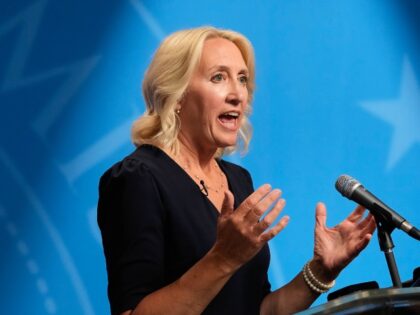
In a political environment where trust in federal institutions has eroded to historic lows, Utah state Rep. Karianne Lisonbee’s challenge to incumbent Rep. Blake Moore signals more than a standard primary contest—it’s a referendum on whether Republican lawmakers will continue to treat the Second Amendment as a talking point or finally treat it as a non-negotiable constitutional boundary. Lisonbee’s call to “restore trust” lands especially hard in a state where outdoor culture, hunting traditions, and self-reliance run deep; voters here have watched Congress repeatedly punt on pro-2A legislation while federal agencies expand rules on pistol braces, ghost guns, and private transfers without legislative authorization. Her candidacy forces the question of whether Moore’s tenure has produced measurable wins—such as blocking new ATF interpretations or advancing national reciprocity—or whether it has defaulted to the familiar pattern of press releases without structural reform.
For the 2A community, this race underscores a broader strategic shift: primary challenges are becoming the most effective pressure valve when leadership refuses to prioritize gun-owner concerns amid spending fights and regulatory rollbacks. Lisonbee’s positioning suggests she understands that trust is rebuilt not through optics but through tangible actions like codifying protections against arbitrary agency rulemaking and ensuring that any future ATF funding is conditioned on respecting statutory limits. If she prevails, it could accelerate a wave of accountability races in other Western and Mountain states where Republican voters increasingly view incumbents through the lens of concrete legislative results rather than seniority or committee assignments. The outcome will test whether the GOP coalition still views the right to keep and bear arms as a core governing principle or merely a reliable turnout tool every two years.


