

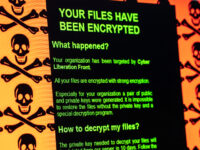
House Republicans are pressing FBI Director Kash Patel to sustain aggressive pressure on ransomware crews that have repeatedly crippled hospital networks, and the move carries quiet but unmistakable relevance for the Second Amendment community. These attacks are not abstract cyber nuisances; they shut down emergency rooms, divert ambulances, and leave trauma centers without functioning imaging or pharmacy systems, turning digital extortion into a direct threat to public safety. When lawmakers single out healthcare as a priority target set, they are acknowledging that certain critical-infrastructure nodes cannot be left to the mercy of foreign criminal syndicates or state-adjacent hackers—an admission that mirrors the broader principle that individuals and institutions retain both the right and the practical need to defend themselves when government response lags.
The deeper implication is that the same logic applied to ransomware defense applies to personal security: reliance on distant federal agencies is no substitute for layered, immediate capability. Hospitals scrambling to restore records after an attack often discover that physical security gaps, insider threats, and supply-chain weaknesses compound the damage; likewise, citizens who cannot count on instantaneous law-enforcement arrival must retain the tools and training to bridge that gap themselves. By spotlighting ransomware as an urgent national-security issue rather than a routine IT problem, congressional Republicans are reinforcing the case that resilience—whether digital or kinetic—belongs first with those on the ground, not solely with Beltway bureaucracies.
For the 2A community, the episode is a reminder that infrastructure protection debates frequently circle back to the same foundational question: who ultimately holds the authority and means to safeguard life and property when systems fail. Keeping ransomware gangs under sustained pressure is a legitimate law-enforcement mission, yet it does not erase the individual right to effective self-defense any more than improved cybersecurity negates the need for armed security details inside hospitals. The push to maintain that pressure therefore sits comfortably alongside longstanding arguments for shall-issue carry, constitutional carry expansions, and the recognition that preparedness is not paranoia but prudent citizenship.


