

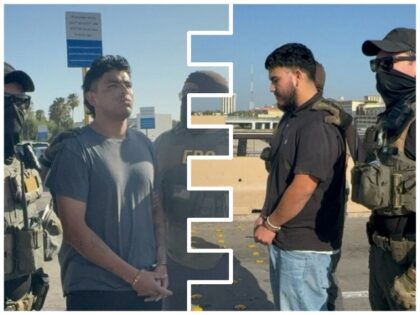
When the Biden administration green-lit the release of a Mexican homicide fugitive into the American interior, it wasn’t just another bureaucratic oversight—it was a deliberate policy choice that placed the safety of U.S. citizens behind the optics of open-border signaling. ICE’s subsequent deportation of that same fugitive, along with a second murder suspect, underscores how quickly the federal government can act when political pressure finally outweighs ideology. For the 2A community, the episode is a stark reminder that the same officials who lecture Americans about “commonsense gun safety” are perfectly willing to import individuals already charged with taking lives, then act surprised when communities demand the right to defend themselves.
The deeper implication is that sanctuary-style enforcement policies don’t merely shield non-violent immigration violators; they also create safe havens for foreign fugitives whose home countries have already done the hard work of identifying them as killers. When those fugitives are later removed only after public exposure, the damage is already done: American neighborhoods absorb the risk, local law enforcement absorbs the cost, and law-abiding gun owners absorb yet another round of blame when violence inevitably follows. The right to keep and bear arms exists precisely because government cannot—or will not—guarantee that every threat is identified and neutralized before it reaches our streets.
For Second Amendment advocates, the takeaway is straightforward: every expansion of permissive immigration enforcement without corresponding vetting or interior enforcement is an implicit tax on the right to self-defense. The faster the administration imports unvetted risks, the more indispensable the individual right to arms becomes. Until federal policy aligns enforcement priorities with public safety rather than political narratives, the 2A community will continue to serve as the last line of deterrence against threats the government itself has chosen to import.


