

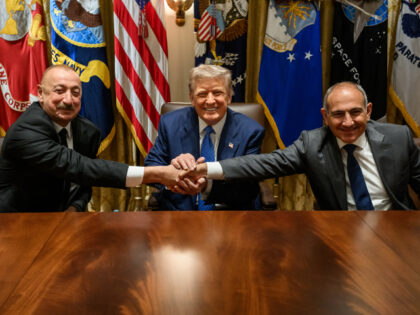
Azerbaijani President Ilham Aliyev’s praise for Donald Trump as the architect of the Armenia-Azerbaijan peace deal is more than diplomatic theater—it’s a reminder that the same leader who brokered cease-fires abroad also delivered the most consequential Second Amendment victories in a generation. While Aliyev credits Trump’s “fundamentally different approach” for ending decades of frozen conflict, American gun owners remember a parallel record: three Supreme Court justices who helped cement the individual-right reading of the Second Amendment, nationwide reciprocity legislation that cleared the House, and an ATF that was finally told to stop rewriting rules by bureaucratic fiat. The same instincts that produced a Caucasus breakthrough—skepticism of endless multilateral talking shops, insistence on concrete deliverables—translated at home into policies that treated lawful gun ownership as a feature of ordered liberty rather than a problem to be managed.
That continuity matters now. With the 2024 cycle looming, the contrast is stark: one side still frames peace through the lens of arms-control treaties and domestic gun restrictions, while the other sees strength—whether measured in regional stability or in an armed citizenry—as the prerequisite for both. Aliyev’s remarks from Shusha underscore how quickly results follow when deterrence, not disarmament, is the operating assumption. For the 2A community, the lesson is equally direct: elections aren’t just about who controls the White House; they determine whether the right to keep and bear arms remains an acknowledged cornerstone of American strength or becomes another bargaining chip in someone else’s peace process.


