

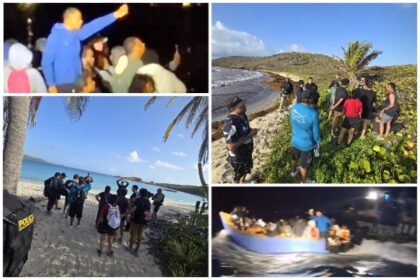
The interdiction of 37 migrants and one U.S. citizen in two separate smuggling runs around Puerto Rico is another data point in a larger pattern: when federal enforcement at the border is inconsistent, criminal networks adapt and exploit every gap, including the maritime approaches to U.S. territories. These small-boat operations are low-tech, high-volume, and difficult to interdict without persistent air and marine assets—assets that are stretched thin precisely because the same agencies are also tasked with chasing fentanyl precursors and transnational gang activity. For the 2A community the takeaway is straightforward: the same porous southern flank that allows human smuggling also serves as a corridor for weapons and narcotics, and the only reliable backstop remains an armed, law-abiding citizenry that refuses to be disarmed while the government’s own enforcement capacity lags.
Puerto Rico’s unique status as both a U.S. territory and a gateway to the mainland amplifies the stakes. Firearms lawfully purchased on the island are already subject to federal restrictions that do not apply in most states, yet the same waters that carried these migrants could just as easily carry weapons destined for gangs operating in San Juan or, worse, smuggled onward to Florida. The 2A argument here is not about demonizing migrants; it is about recognizing that any policy that effectively decriminalizes unlawful entry incentivizes the very smuggling infrastructure that later moves more dangerous cargo. Law-abiding gun owners in Puerto Rico and the continental states therefore have a direct interest in demanding that Customs and Border Protection receive the sustained funding and political support needed to close these maritime routes—because the alternative is relying on private citizens to defend communities the federal government has effectively left exposed.
The larger implication is that border security and the right to keep and bear arms are not separate issues; they are two sides of the same sovereignty question. When the state cannot or will not control its perimeter, the practical effect is to shift the burden of security onto individuals who must then navigate increasingly restrictive gun laws in the very places most affected by the resulting disorder. The 37 migrants in small boats are a symptom; the disease is a federal immigration posture that treats enforcement as optional while simultaneously pushing policies that would further disarm the law-abiding population asked to live with the consequences.


