

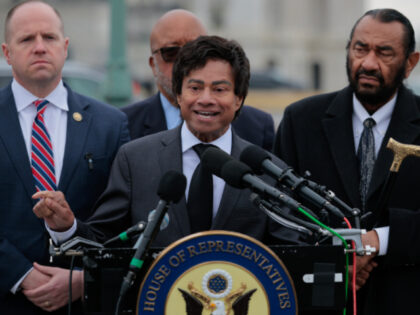
Rep. Shrinivas Thanedar’s push to flood his economically struggling Michigan district with more seasonal migrant labor isn’t just another immigration headline—it’s a textbook case of politicians treating people as interchangeable economic inputs rather than citizens with rights. By labeling accelerated inflows “essential,” Thanedar reveals the same mindset that views the Second Amendment as an inconvenient speed bump on the road to centralized control: both gun owners and native-born workers are obstacles when the goal is rapid demographic and economic engineering from above. The district’s persistent poverty suggests deeper structural problems—failed schools, regulatory barriers, and welfare traps—that more low-wage arrivals won’t fix and may actually worsen by suppressing wages and straining already thin public resources.
For the 2A community the connection is straightforward: districts that import large numbers of non-citizens and non-assimilated populations tend to produce representatives who treat constitutional rights as negotiable privileges rather than bedrock protections. Thanedar’s district already leans heavily toward policies that chip away at self-defense rights while expanding government dependency; adding more transient workers unlikely to become engaged, rights-conscious voters only tilts the scale further. The same federal machinery being asked to speed up labor migration can just as easily be used to speed up registration schemes, magazine bans, or red-flag expansions once political incentives shift.
Ultimately this story underscores why pro-2A advocates must watch immigration and electoral math as closely as they watch ATF rulemakings. When representatives openly prioritize imported labor over lifting up existing residents, they signal a willingness to reshape the electorate itself—an electorate that will eventually decide whether the right to keep and bear arms remains a living guarantee or becomes a fading memory in districts redefined by top-down population policy.


