

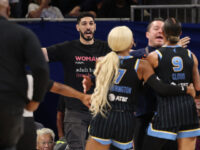
Enes Kanter Freedom’s ejection from a WNBA game isn’t just another sideline spat—it’s a vivid reminder that the right to keep and bear arms is inseparable from the right to speak freely, even when the arena is packed with people who disagree. The former NBA center, who legally changed his name to honor the freedoms he found in America, was tossed after a heated exchange with Chicago Sky guard Natasha Cloud, a vocal gun-control advocate. What began as a courtside conversation quickly escalated into a public clash that security decided to end by removing the outspoken 2A supporter rather than letting the dialogue continue. In a league that markets itself on empowerment and inclusion, the optics of silencing a peaceful critic—especially one whose very name embodies the liberties the Constitution protects—speak louder than any press release.
For the 2A community, the episode underscores a recurring pattern: when cultural institutions feel threatened by dissenting views on firearms, they often default to exclusion rather than engagement. Freedom’s presence at the game was itself an exercise in the same individual liberty that underpins the Second Amendment; he wasn’t brandishing a weapon or inciting violence—he was simply existing in a public space while holding an opinion that runs counter to the prevailing narrative in professional women’s basketball. The swift ejection sends a chilling signal that certain venues may tolerate only one side of the gun-policy debate, effectively turning ticket-buying fans into a captive audience for progressive orthodoxy. That dynamic matters because cultural pressure can be as effective as legislation in chilling lawful gun ownership and open discourse.
Ultimately, the incident crystallizes why the right to arms and the right to speak must be defended in tandem. If a high-profile athlete can be removed from a privately owned arena for politely voicing support for the Second Amendment, then the cultural battlefield is as consequential as any legislative chamber. The 2A community should treat this not as an isolated PR hiccup but as evidence that winning hearts and minds requires showing up—literally and figuratively—where the conversation is happening, even when doing so risks ejection.


