

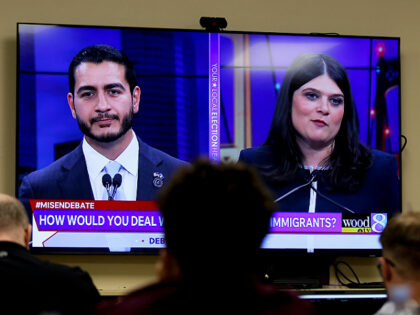
Abdul El-Sayed’s apparent primary victory over Rep. Haley Stevens is more than a Michigan upset—it’s a live demonstration of how the Democratic Party’s center of gravity is shifting leftward at warp speed. El-Sayed, a self-described democratic socialist who once called for a “radical transformation” of American institutions, now looks poised to carry the banner in a district that includes suburban Oakland County and parts of Detroit. For gun owners, the contrast is stark: Stevens, while no friend of the Second Amendment, at least occasionally broke with the party line on issues like pistol braces and supported limited due-process protections in red-flag bills. El-Sayed’s platform, by contrast, embraces the full progressive wish list—universal background checks, assault-weapon restrictions, and “buyback” schemes that amount to confiscation with a government check attached.
The ripple effects will be felt far beyond Michigan’s 11th. A win by El-Sayed telegraphs to every vulnerable House Democrat that the safest electoral real estate may no longer be the center, but the energized activist base. That calculation usually produces louder calls for national gun licensing, magazine bans, and funding for state-level attorneys general eager to bankrupt the industry through litigation. Suburban gun owners who once felt insulated by split-ticket voting will discover that the Overton window has moved; what used to be a “common-sense” universal-check bill can quickly become a prerequisite for owning a semiautomatic rifle. Meanwhile, Republican strategists gain a tailor-made contrast: an unapologetic defender of the Second Amendment versus a candidate who views private firearm ownership as a public-health crisis to be cured.
The deeper lesson for the 2A community is that primaries are where the battlefield is being reshaped. While national attention fixates on November generals, the machinery that selects the candidates—low-turnout, activist-driven contests—is tilting further against gun owners with each cycle. If El-Sayed’s brand of politics becomes the Democratic baseline in swing districts, the industry’s exposure is no longer limited to coastal strongholds; it reaches into exurban corridors where ranges, trainers, and FFL dealers have long operated with minimal interference. The prudent response is to treat every primary, school-board race, and prosecutor contest as a Second Amendment referendum, because the people who write the rules are being chosen long before Election Night headlines roll.


