

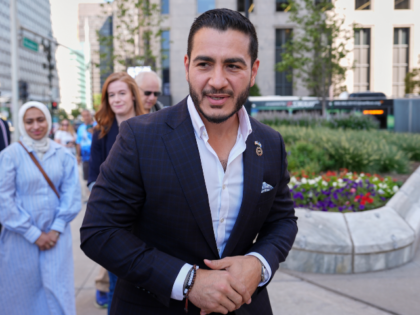
Abdul El-Sayed’s invocation of the “Right to Try” law to defend medical interventions on minors is a textbook example of how the same rhetorical toolkit used to expand government-approved medical pathways can later be turned against the very individual liberties the 2A community holds sacred. When a candidate equates a parent’s decision to green-light puberty blockers or surgeries with the freedom to try experimental drugs, he is really arguing that the state’s only role is to rubber-stamp whatever credentialed professionals and insurance formularies decide. That is the same logic that once justified “may-issue” carry permitting, onerous training mandates, and red-flag laws: if government can’t “dictate healthcare,” then it certainly can’t dictate who may keep and bear arms for self-defense. The 2A community has watched this bait-and-switch before—promises of expanded choice quickly morph into regulatory capture by insurers, hospitals, and activist bureaucracies that later redefine “medical necessity” to exclude lawful firearm ownership for anyone on anxiety medication or undergoing mental-health treatment.
The deeper implication is that once medicine is treated as a purely private contract shielded from democratic oversight, every rights-based argument becomes a matter of access rather than principle. Under El-Sayed’s framework, a teenager’s demand for irreversible procedures is indistinguishable from a diabetic’s request for insulin; both are labeled “healthcare decisions,” and questioning either is framed as government overreach. That flattens the distinction between reversible therapies and permanent alterations of healthy physiology, and it erases parents or legislators who believe the state does have a compelling interest in protecting minors from experimental pathways with known sterility and bone-density risks. The same linguistic move has already appeared in debates over firearm prohibitions for veterans flagged with PTSD diagnoses: a medical designation becomes an administrative tripwire that revokes a constitutional right without due process. If “healthcare” is an untouchable black box, then gun-owning parents could one day find schools or pediatricians mandated to report stable, responsible households simply because they own firearms.
For the 2A community, the lesson is to recognize when the vocabulary of medical autonomy is being weaponized to shrink the sphere of democratic accountability. The Right to Try law was narrowly tailored to terminally ill adults facing imminent death; transplanting its logic onto healthy minors for elective, ideologically charged procedures is not an expansion of freedom but a redefinition of whose judgment counts. Gun owners who once cheered the principle of patient sovereignty must now ask whether that principle will be invoked to sideline their own objections when schools adopt “gender-affirming” policies or when insurers refuse to cover carriers of certain genetic markers. In short, the same slogan El-Sayed now borrows to justify medical interventions on children can just as easily be redeployed to justify keeping lawful firearms out of the hands of anyone whose medical file fails a future political litmus test.


