

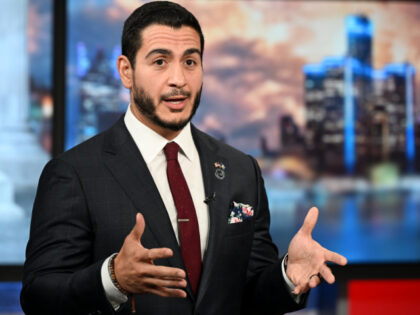
Michigan Attorney General Dana Nessel’s decision to skip her own party’s nominating convention because she no longer feels safe there is more than a local political spat—it’s a flashing warning light for anyone who still believes the Second Amendment is only about hunting or sport. When a sitting Democratic AG admits the gathering of her own activists has become too hostile for her to attend, the conversation shifts from abstract “gun violence” talking points to the very real question of whether law-abiding citizens can rely on government to protect them when political violence is normalized. The fact that the party’s rising star, Abdul El-Sayed, responds by dismissing concerns about antisemitism as mere cover for shielding Israel tells you everything about which threats the modern left is willing to name and which it prefers to rationalize.
For the 2A community, the takeaway is straightforward: if even high-ranking Democrats are now calculating personal risk at their own events, the notion that “assault weapon” bans or magazine restrictions will somehow pacify ideological violence looks increasingly detached from reality. History shows that when institutions signal weakness—by tolerating open antisemitism, by refusing to police their own spaces, or by treating self-defense as suspect—citizens who value their safety begin to diversify their risk. That diversification often starts with the sober recognition that the right to keep and bear arms is not a cultural hobby; it is the last line when the people charged with keeping order declare their own venues off-limits.
The deeper implication is electoral. Voters watching this exchange will remember who felt endangered by rhetoric and who felt emboldened by it. In a swing state like Michigan, where suburban and independent voters still decide close races, the image of a Democratic Senate hopeful shrugging off safety concerns while the state’s top law-enforcement officer stays home could accelerate the very shift the gun-rights movement has long predicted: an electorate that stops outsourcing personal security to politicians who can’t guarantee it even for themselves.


