

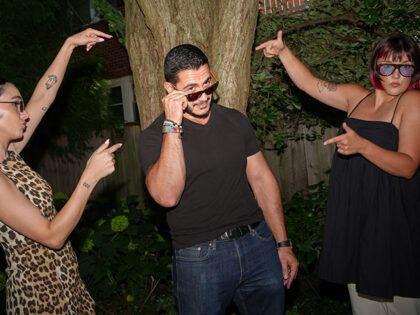
Abdul El-Sayed’s coy refusal to distance himself from Twitch provocateur Hasan Piker while simultaneously pining for Rep. Haley Stevens on the trail is more than a scheduling preference—it’s a window into how the modern Democratic coalition treats the Second Amendment as an afterthought. Piker’s brand of “eat-the-rich” radicalism has included open calls for violence against political opponents and a cavalier dismissal of private gun ownership as some bourgeois fetish; Stevens, by contrast, represents the suburban swing voter who still remembers what happened to Hillary Clinton when she let the coastal left drag her too far left on guns. By signaling that ideological purity tests matter less than star-power optics, El-Sayed is telling gun owners their concerns rank somewhere below a cable-news cameo.
That calculus matters in a state whose electoral math hinges on Macomb and Oakland counties—places where deer-hunting Democrats and union households still treat the right to keep and bear arms as non-negotiable. If El-Sayed’s campaign treats Stevens as a luxury and Piker as background noise, it telegraphs that any future majority in Lansing will be built without a single concession to the state’s roughly two million CPL holders. The result is predictable: more SAFE-style storage mandates, red-flag laws drafted by people who have never cleared a holster, and the slow administrative squeeze that turns “common-sense reform” into de-facto confiscation.
For the 2A community the lesson is straightforward—enthusiasm gaps are policy gaps. When a candidate’s circle includes streamers who fantasize about gulags but excludes lawmakers who occasionally nod to sporting traditions, the margin for error on gun issues shrinks to zero. Michigan’s gun owners have the donor lists, the range networks, and the turnout operation to make that margin visible on election night; the only question is whether they’ll use it before the next omnibus gun-control vehicle is quietly tucked into a must-pass budget.


